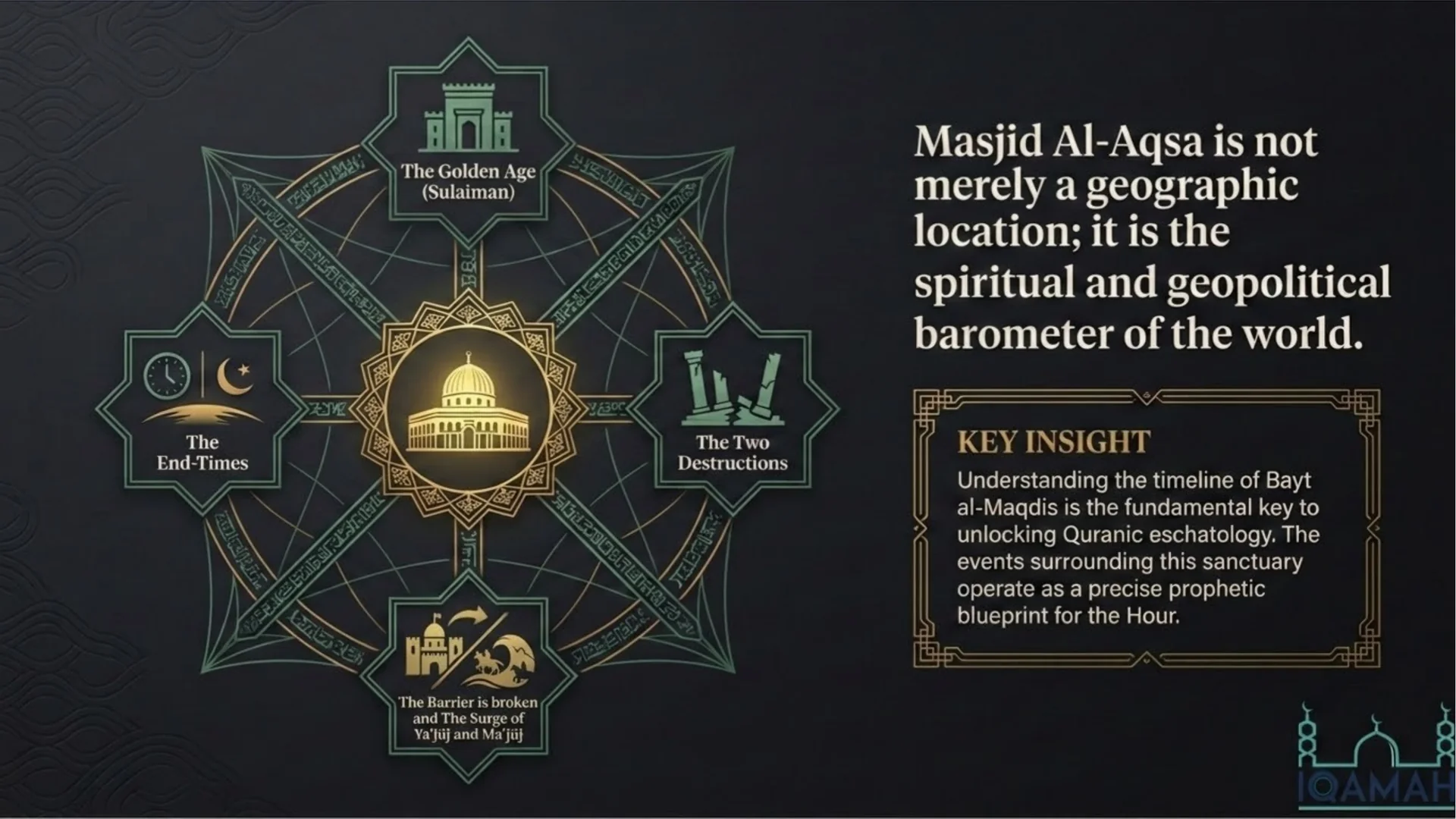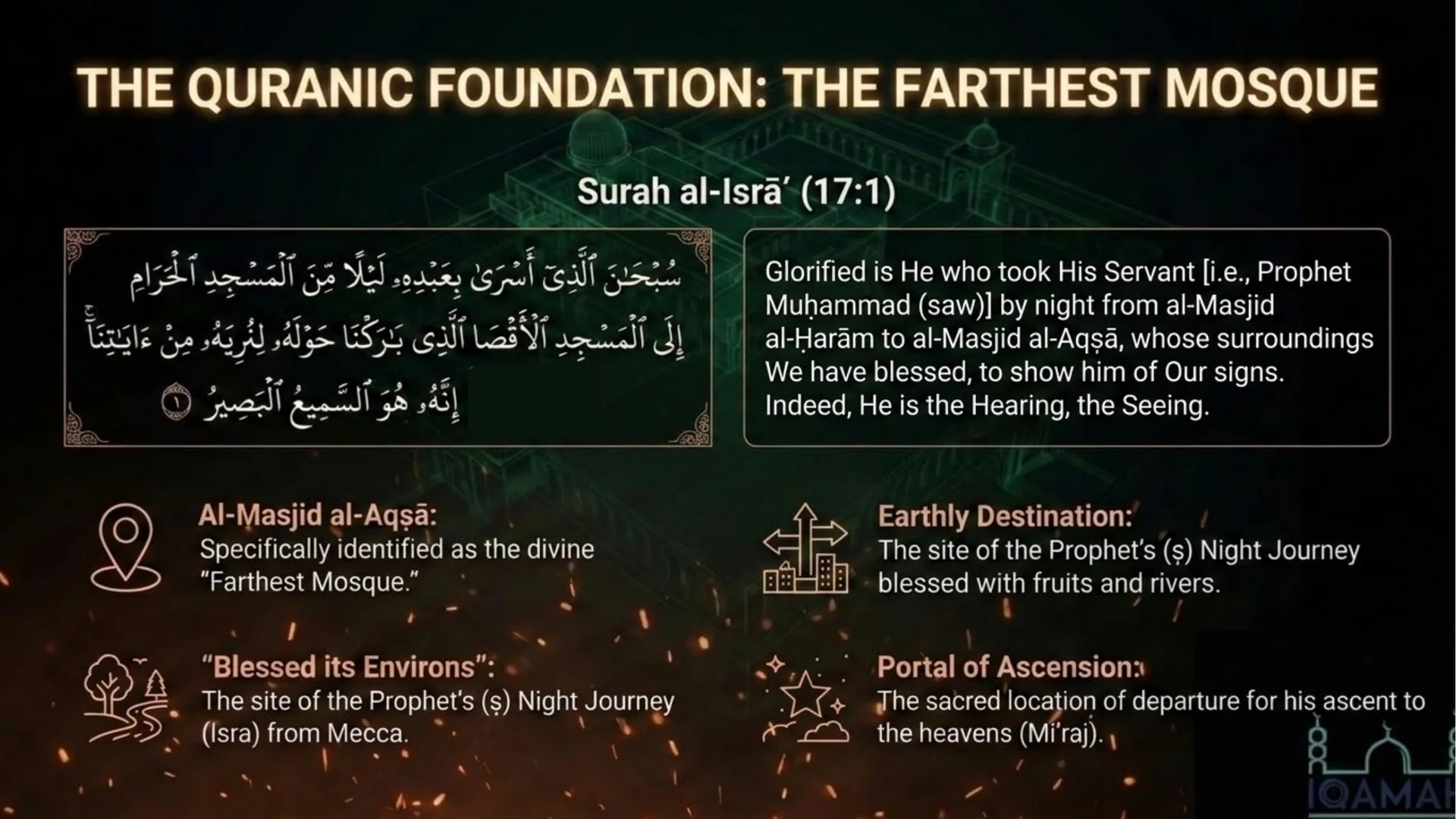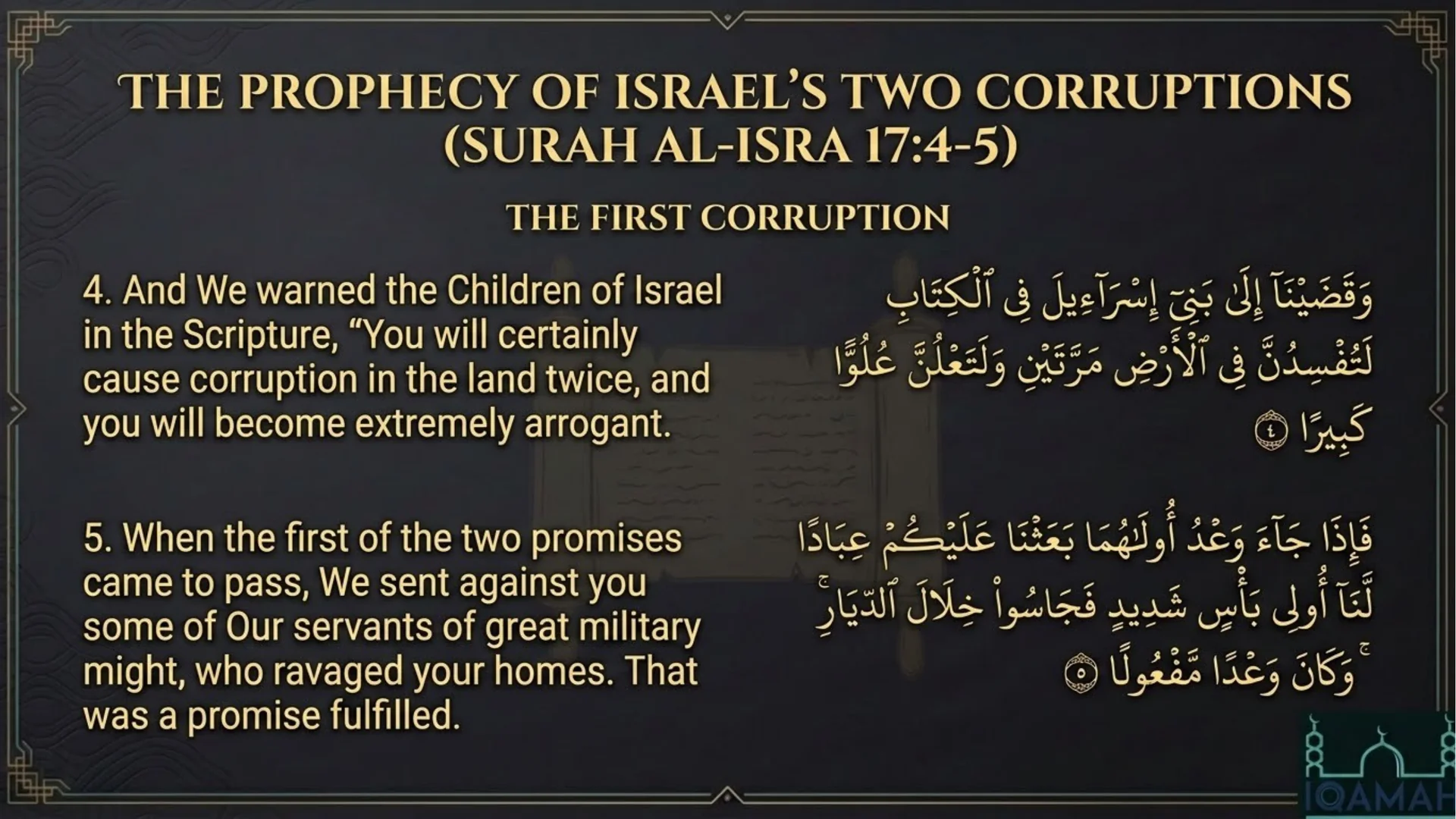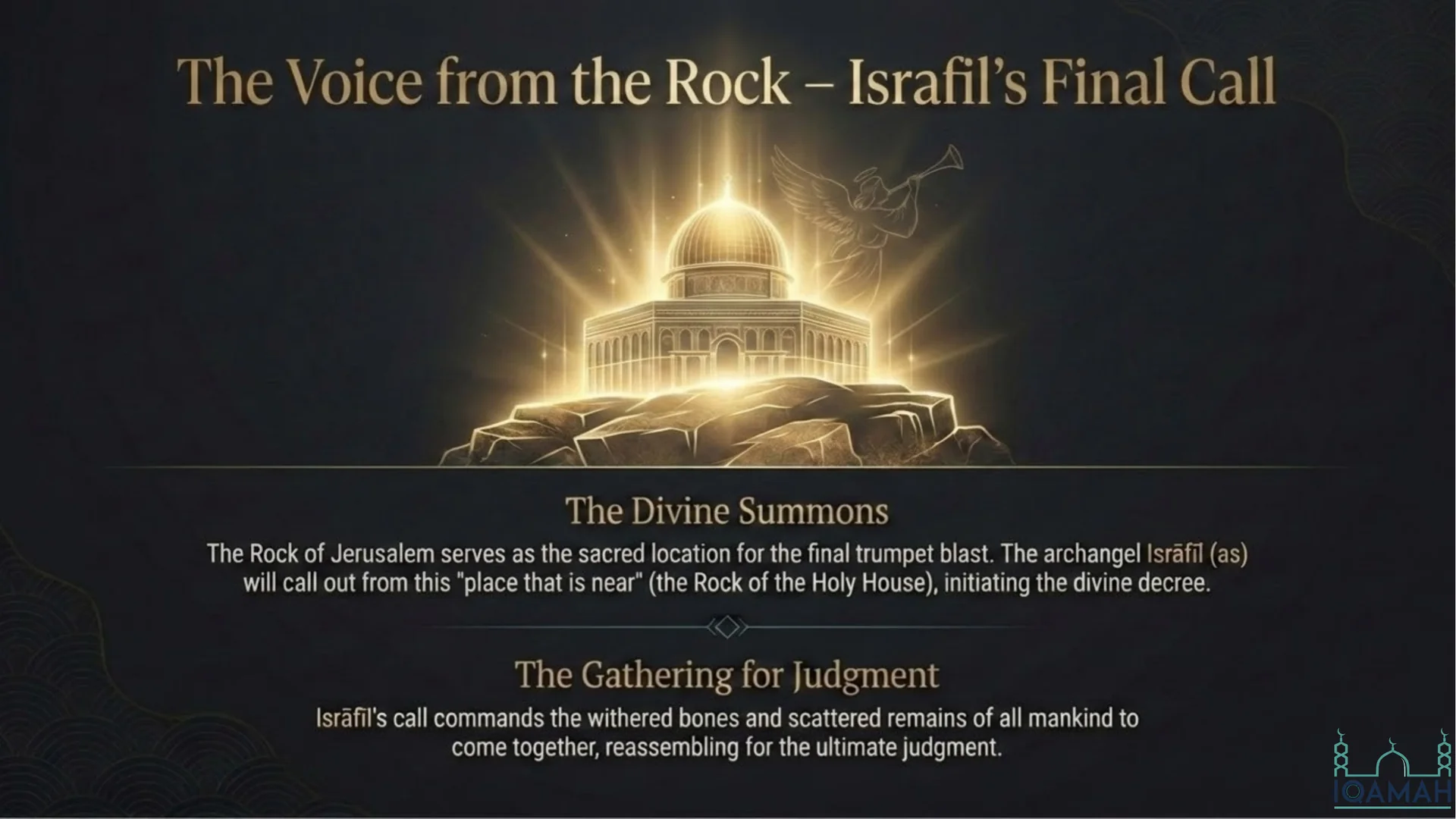
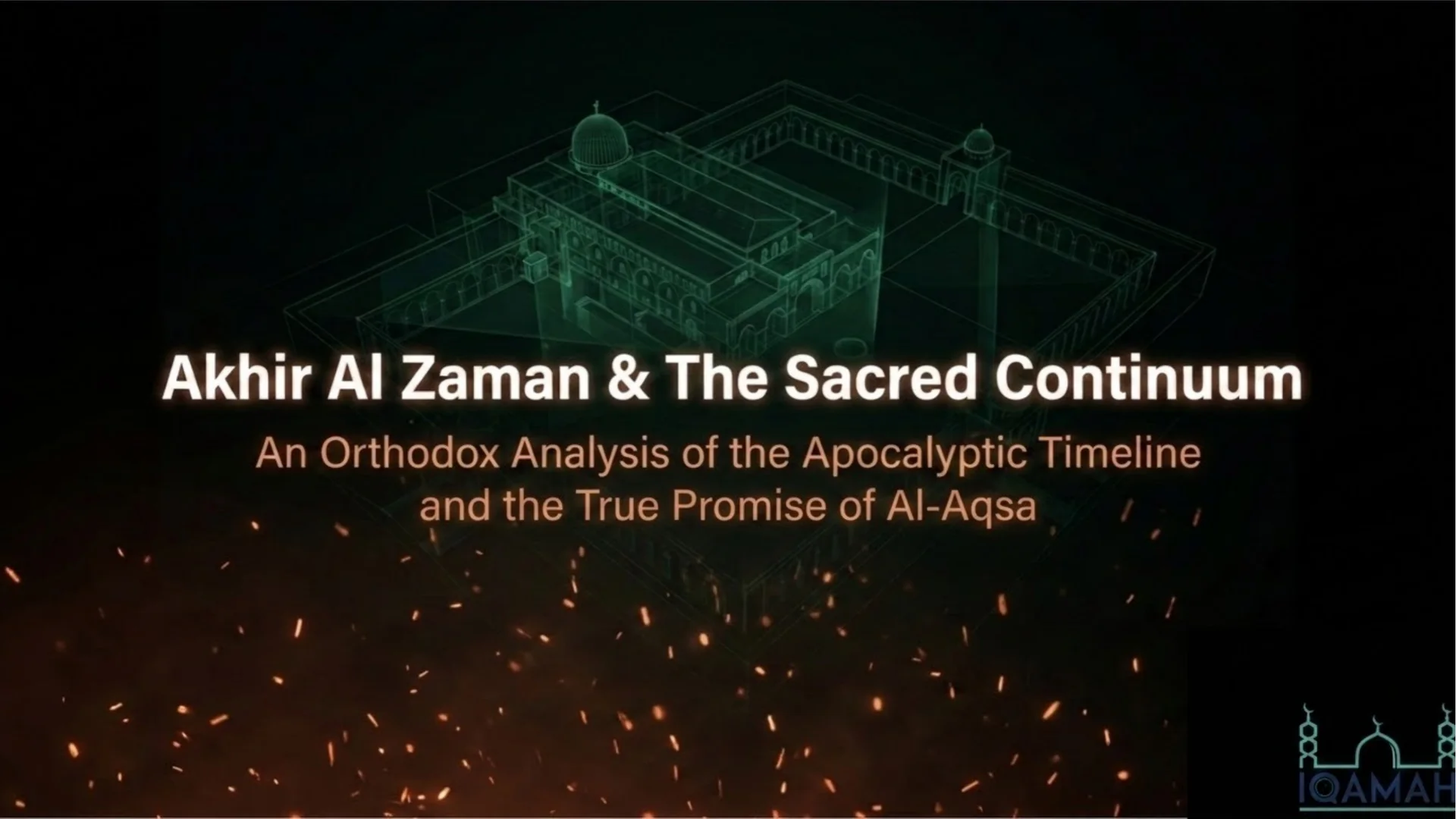
Bismillāh, wa-l-ḥamdu lillāh, wa-l-ṣalātu wa-l-salāmu ʿalā Rasūlillāh. Tonight we set out on the horizon of ākhir al-zamān — the end of time — and we read it through the gate of one sacred place: Bayt al-Maqdis and Masjid al-Aqṣā. The title before you names a 'sacred continuum,' and that is the single thread I want us to hold from the first slide to the last. From the first raising of the sanctuary by the Prophets of old, through its two destructions and its liberations, down to the final unfolding of the Hour, there runs one unbroken divine plan — and Bayt al-Maqdis is the barometer by which we read it.
Let me say a word about how we will study this, because the method matters as much as the material. Knowledge of the Hour belongs to Allah alone. He says in Sūrat al-Aʿrāf, 'They ask you about the Hour: when is its arrival? Say: its knowledge is only with my Lord' (7:187), and in Luqmān, 'Indeed, Allah — with Him is knowledge of the Hour' (31:34). So we do not gather here to fix dates; setting a date for the Hour is something the Sharīʿah forbids, and every generation that has tried has been humbled. We gather instead to read the ashrāṭ al-sāʿah — the signs of the Hour — so that the heart wakes up and prepares.
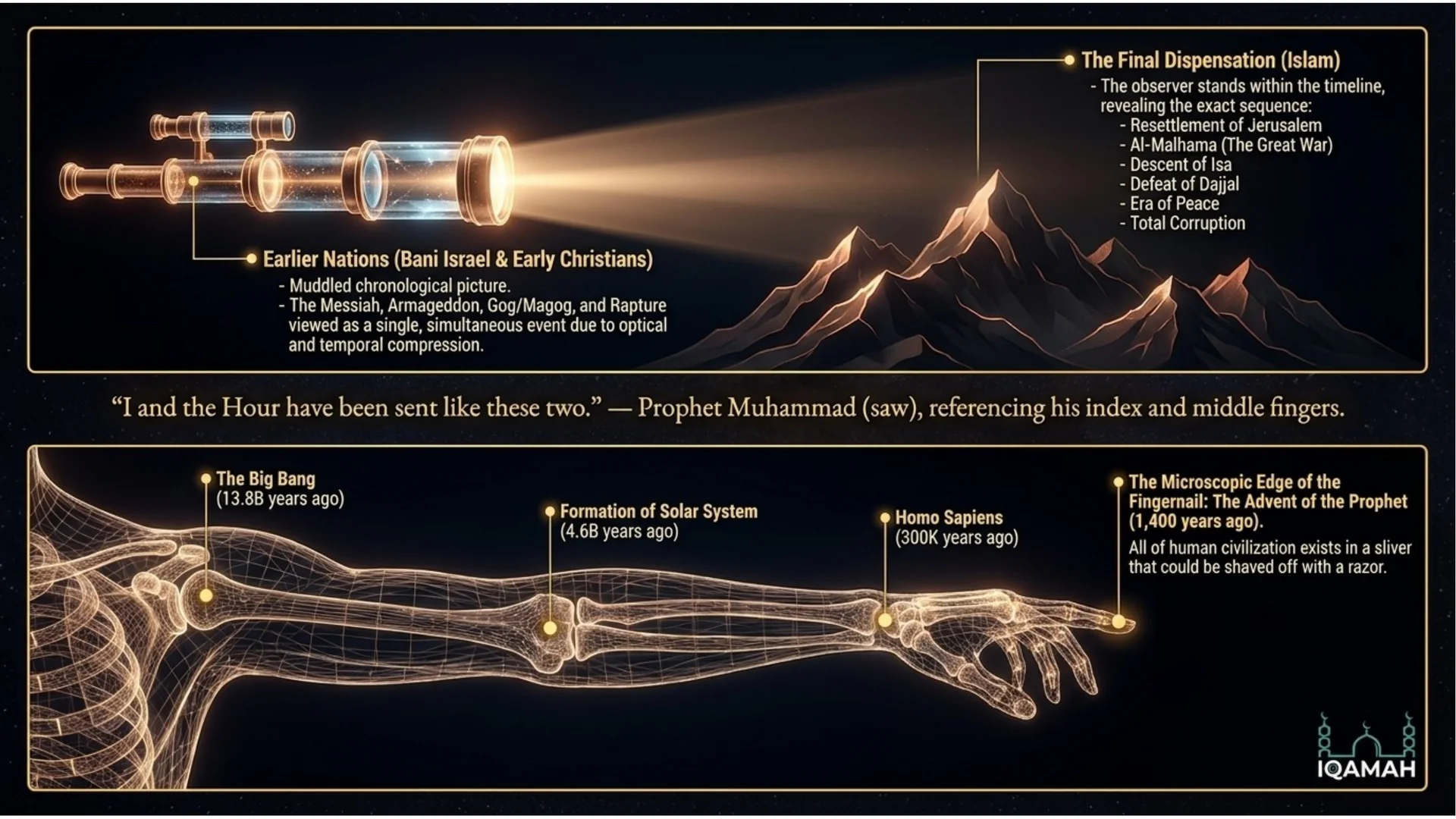
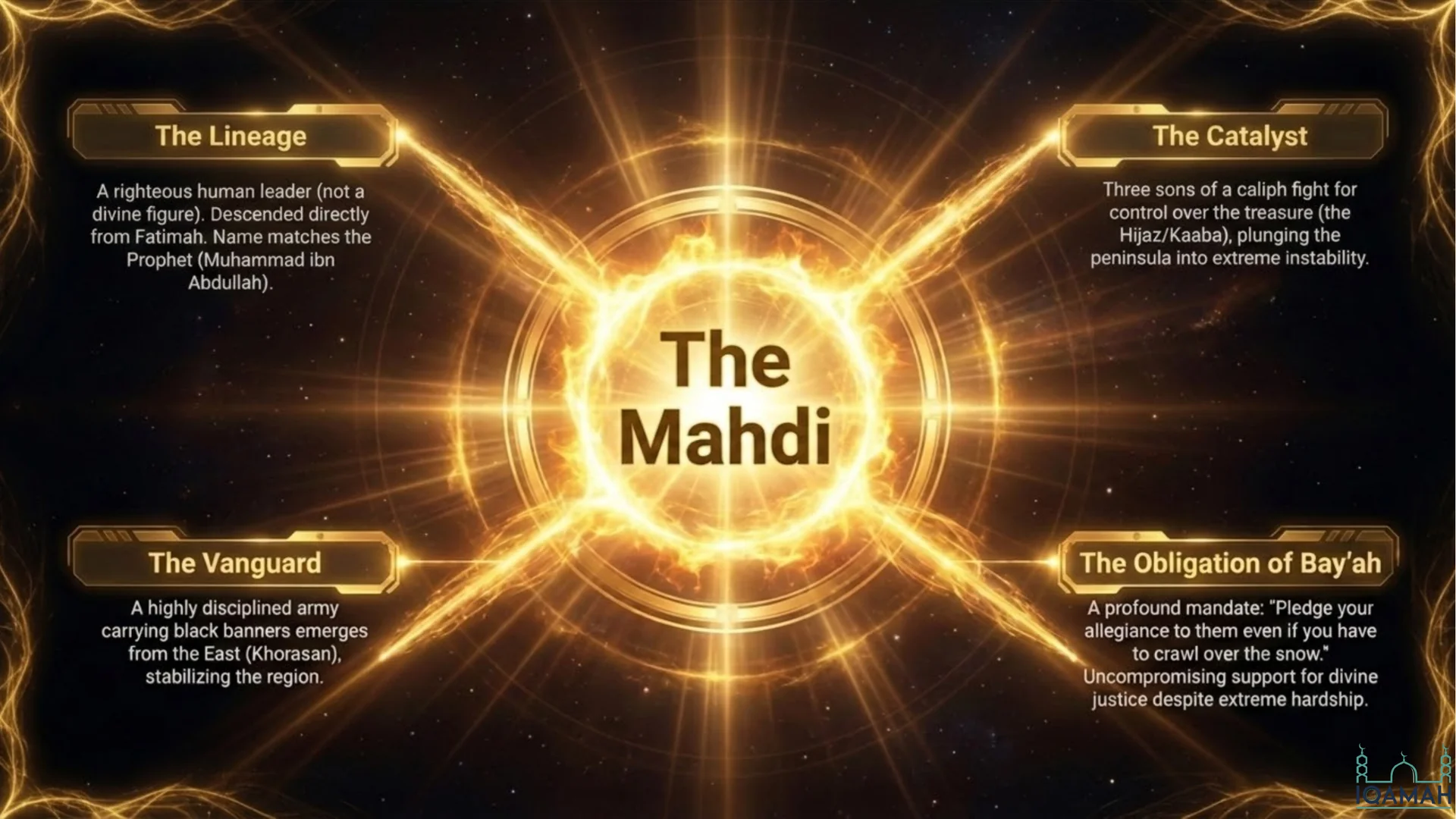
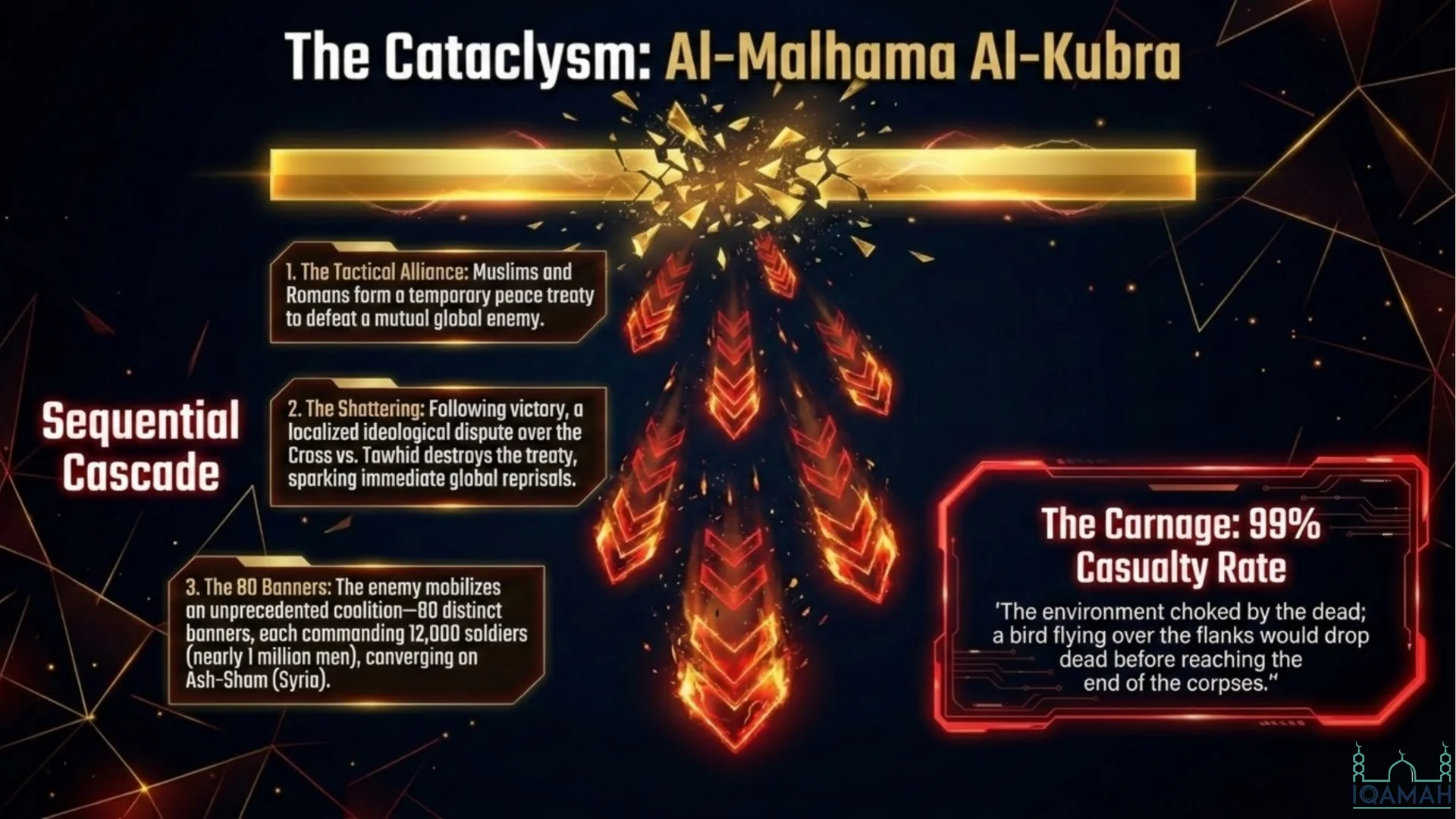
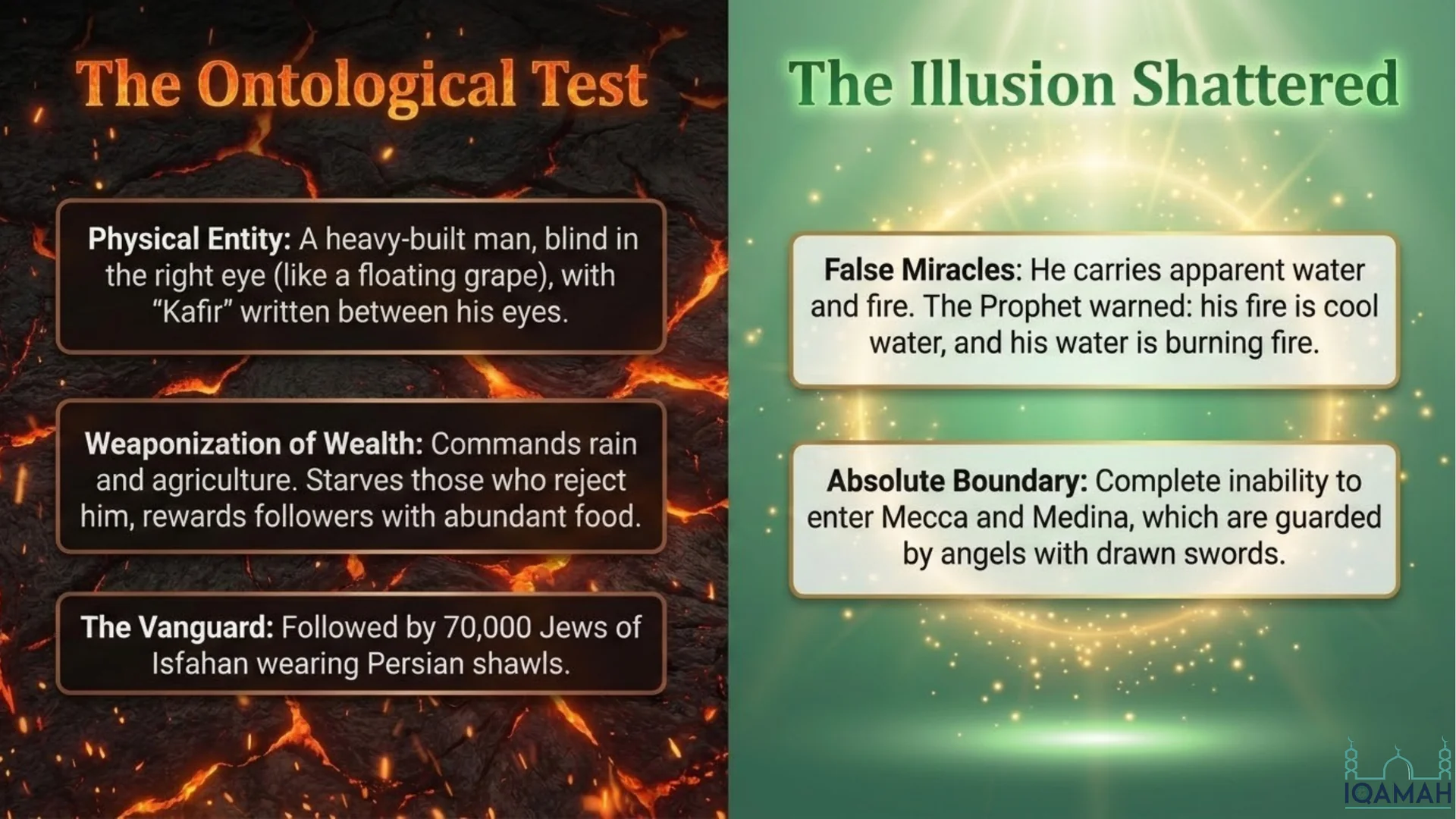
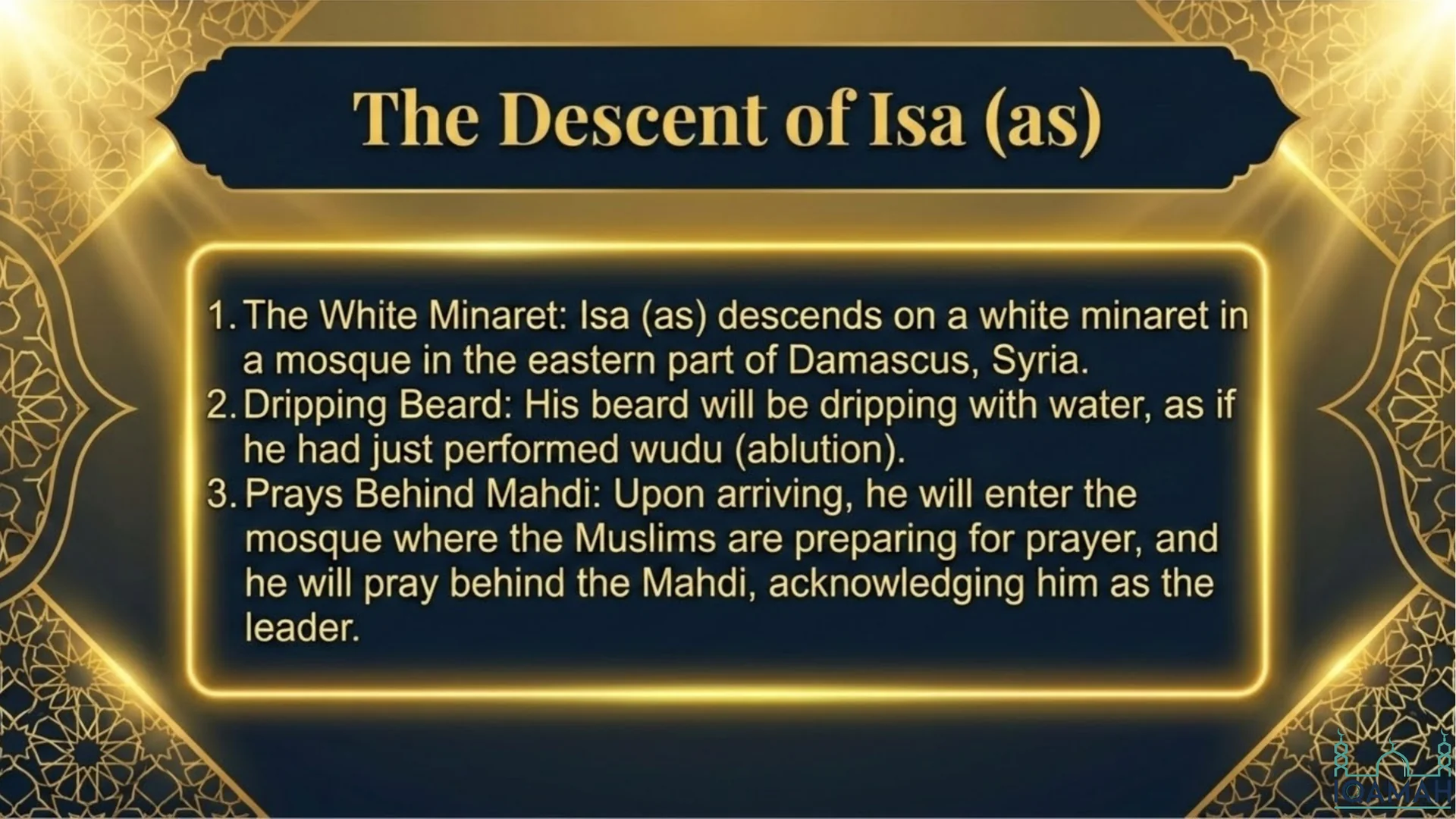
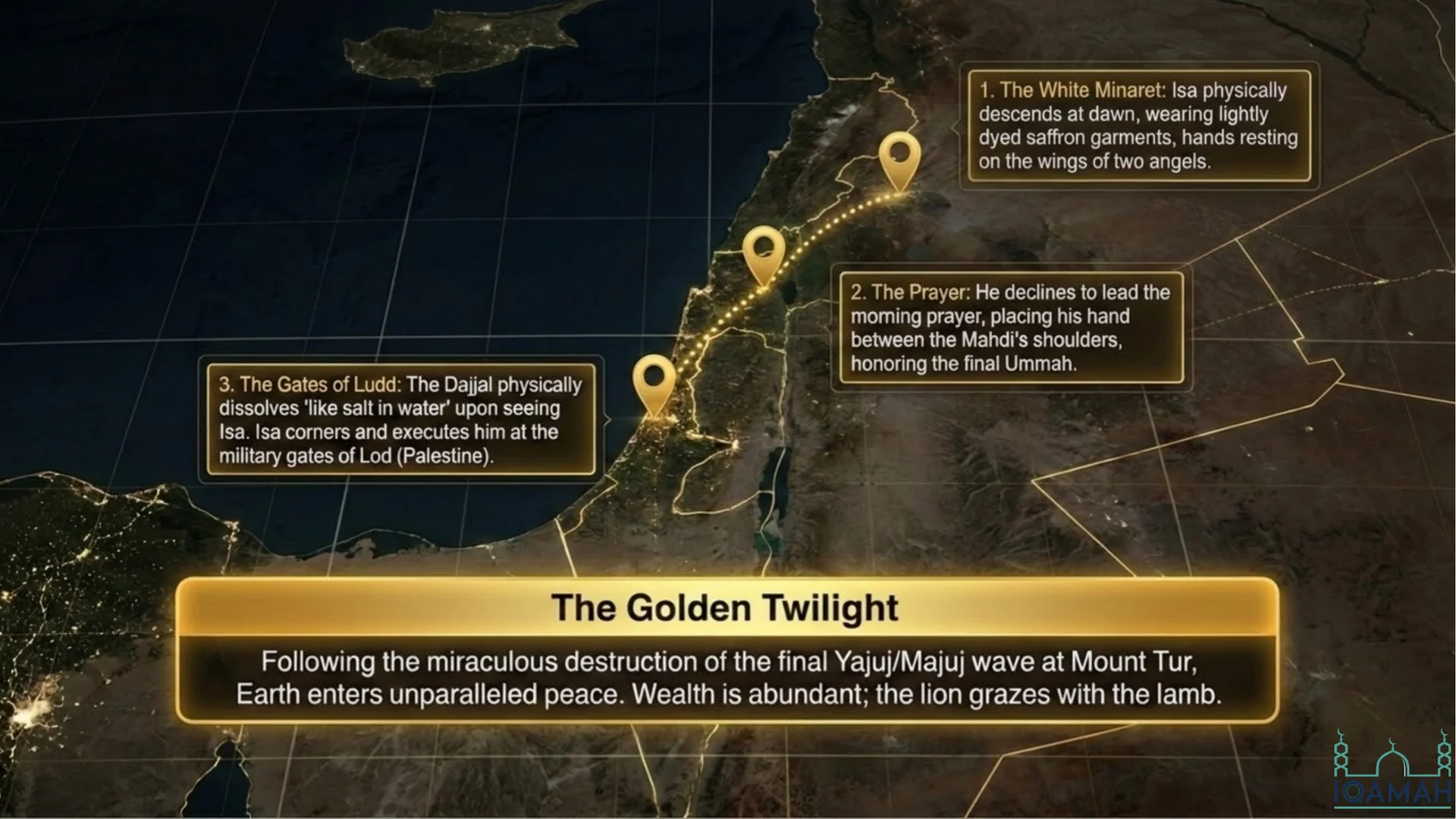
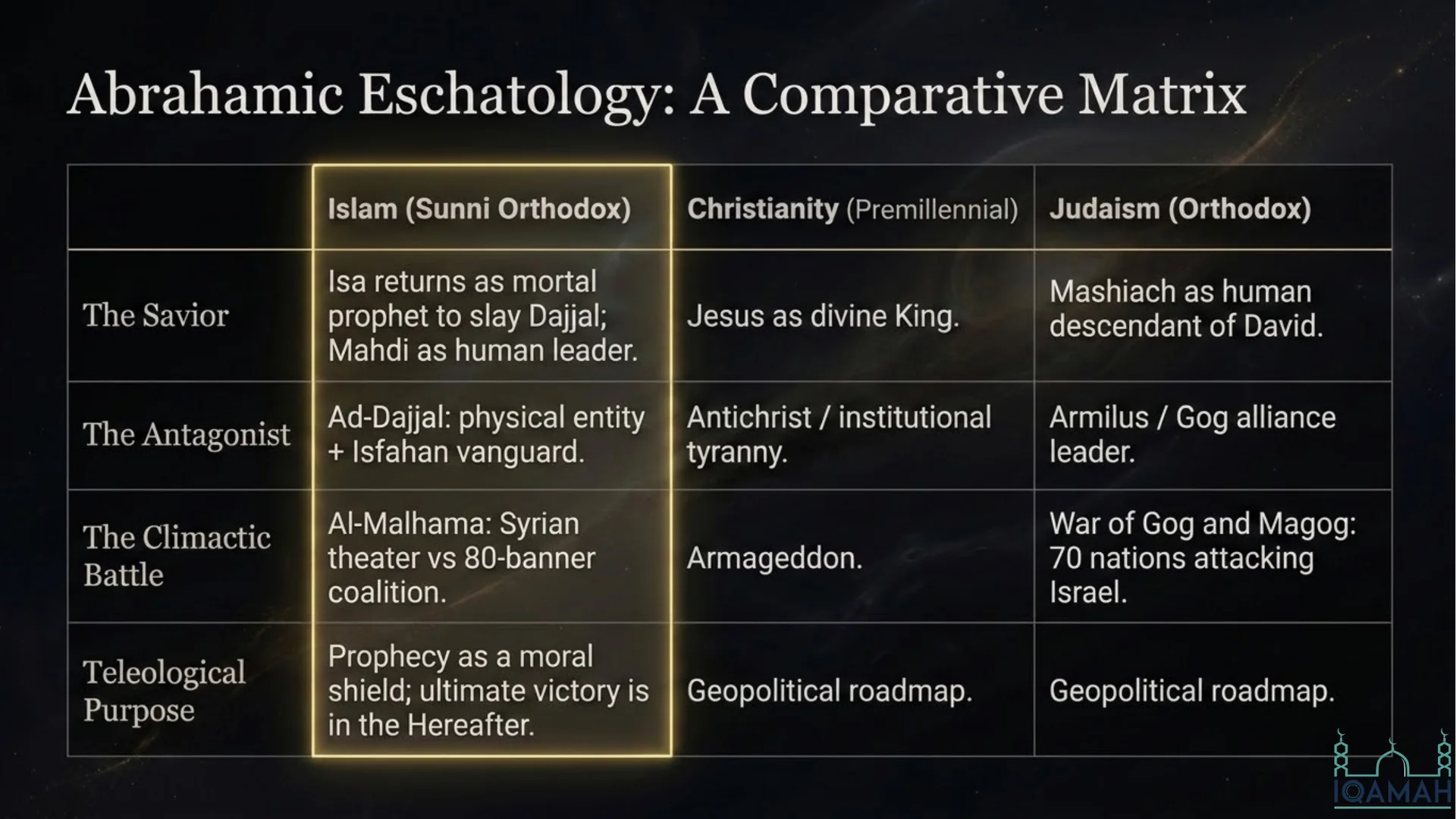
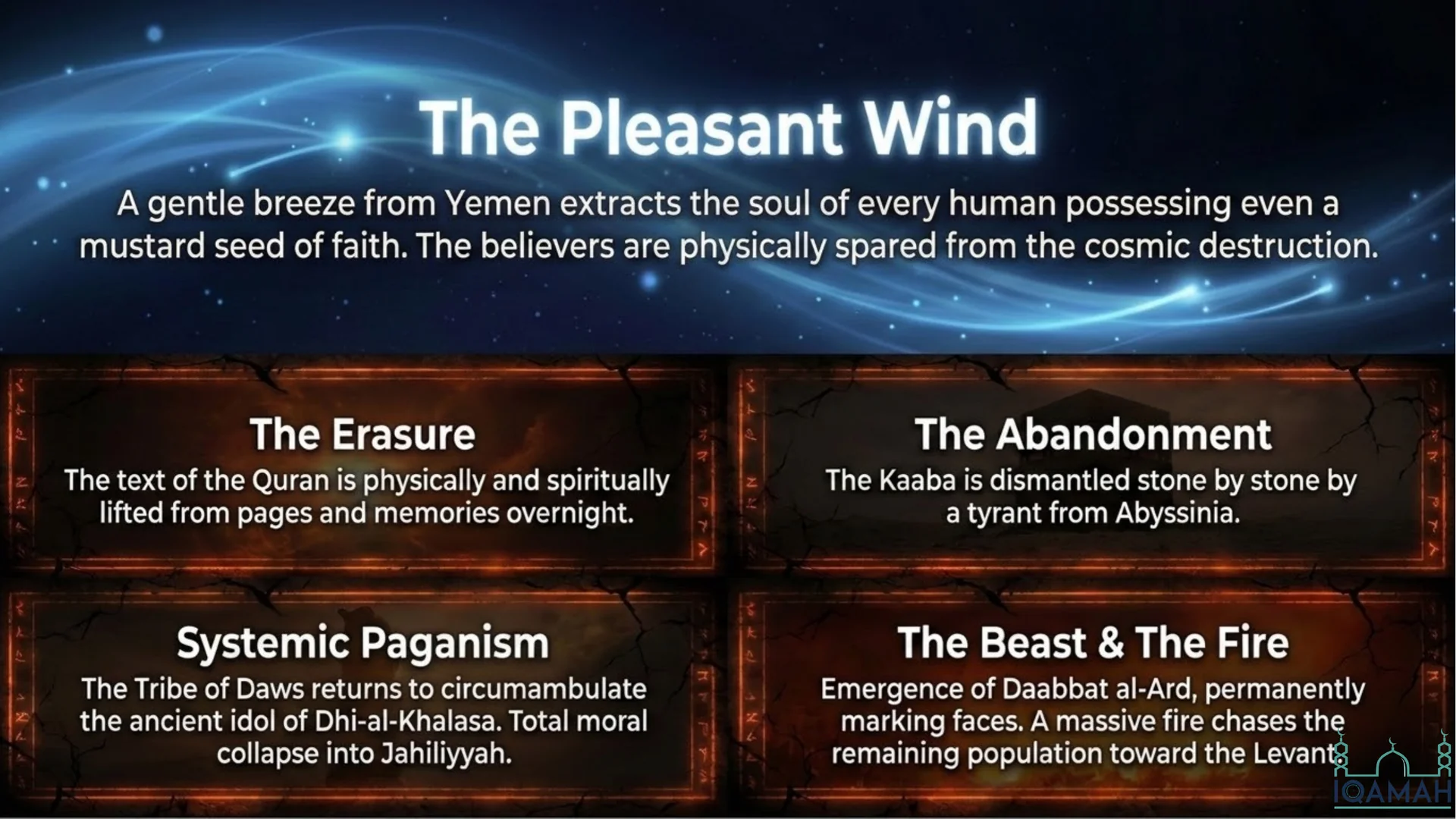
What makes our position unique is this: the Prophet ﷺ was given, in the Qurʾān and in the authentic Sunnah, a sequence of the great end-time events more ordered and more detailed than any nation before us ever received. Our task across these slides is threefold — to recognise that order, to distinguish firmly what is established in the Book and the Ṣaḥīḥ corpus from what is the interpretation of later scholars, and to let the whole picture move us toward taqwā and readiness. Throughout, we lean above all on the great narration of al-Nawwās ibn Samʿān in Ṣaḥīḥ Muslim, which lays the Dajjāl, the descent of ʿĪsā, and Yaʾjūj wa Maʾjūj in sequence, and on Ibn Kathīr's al-Bidāya wa-l-Nihāya for the history and the malāḥim.