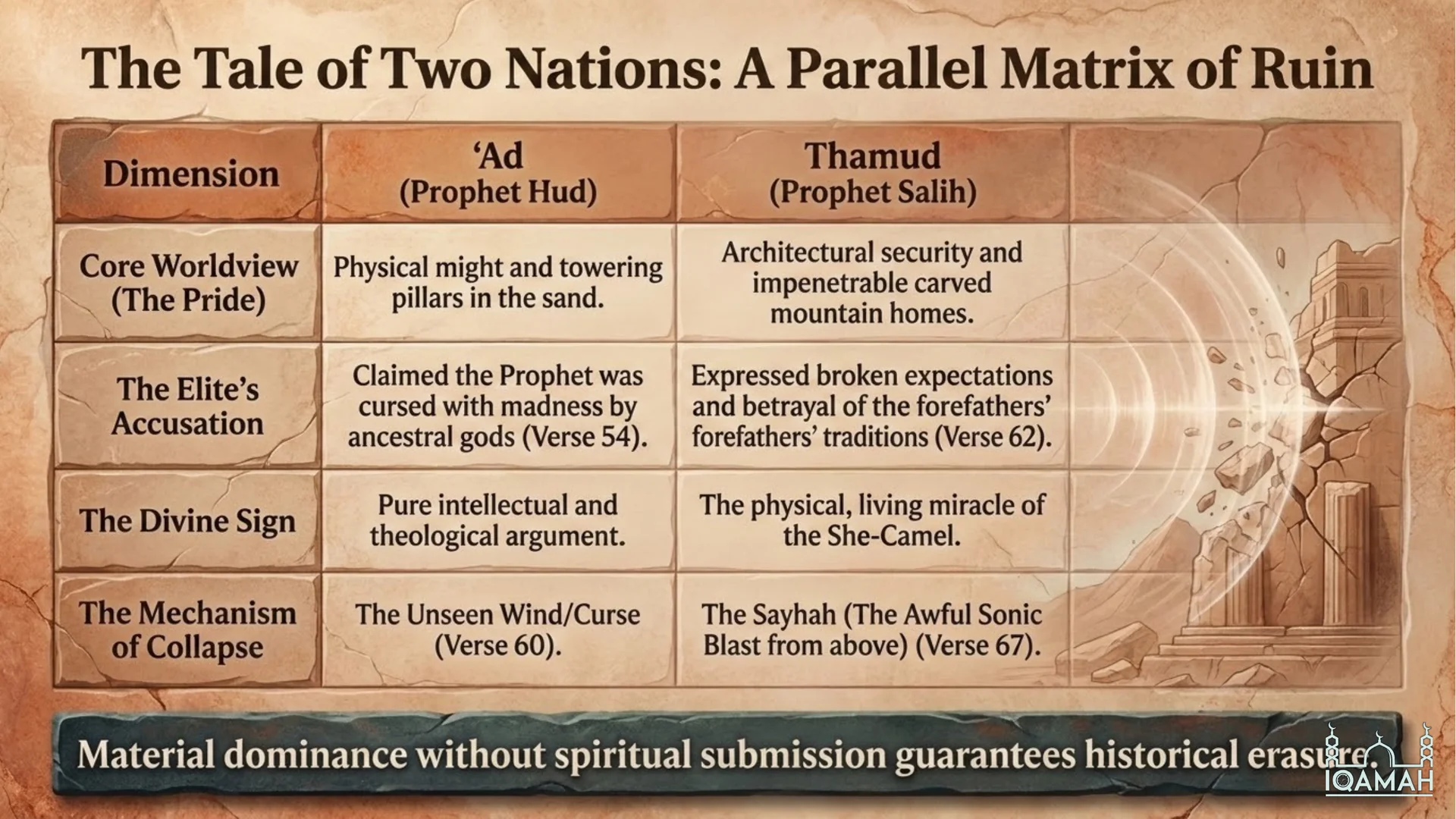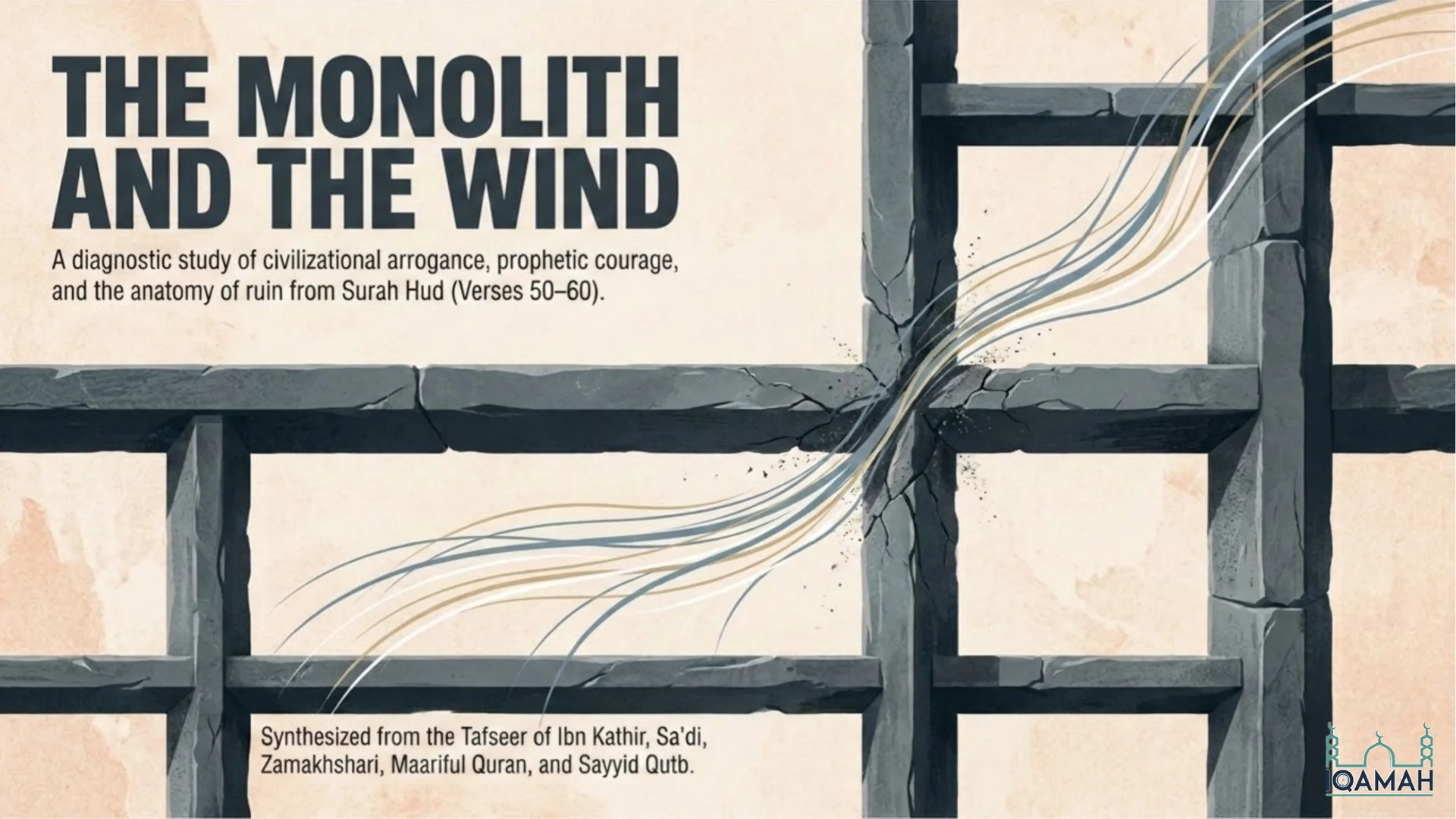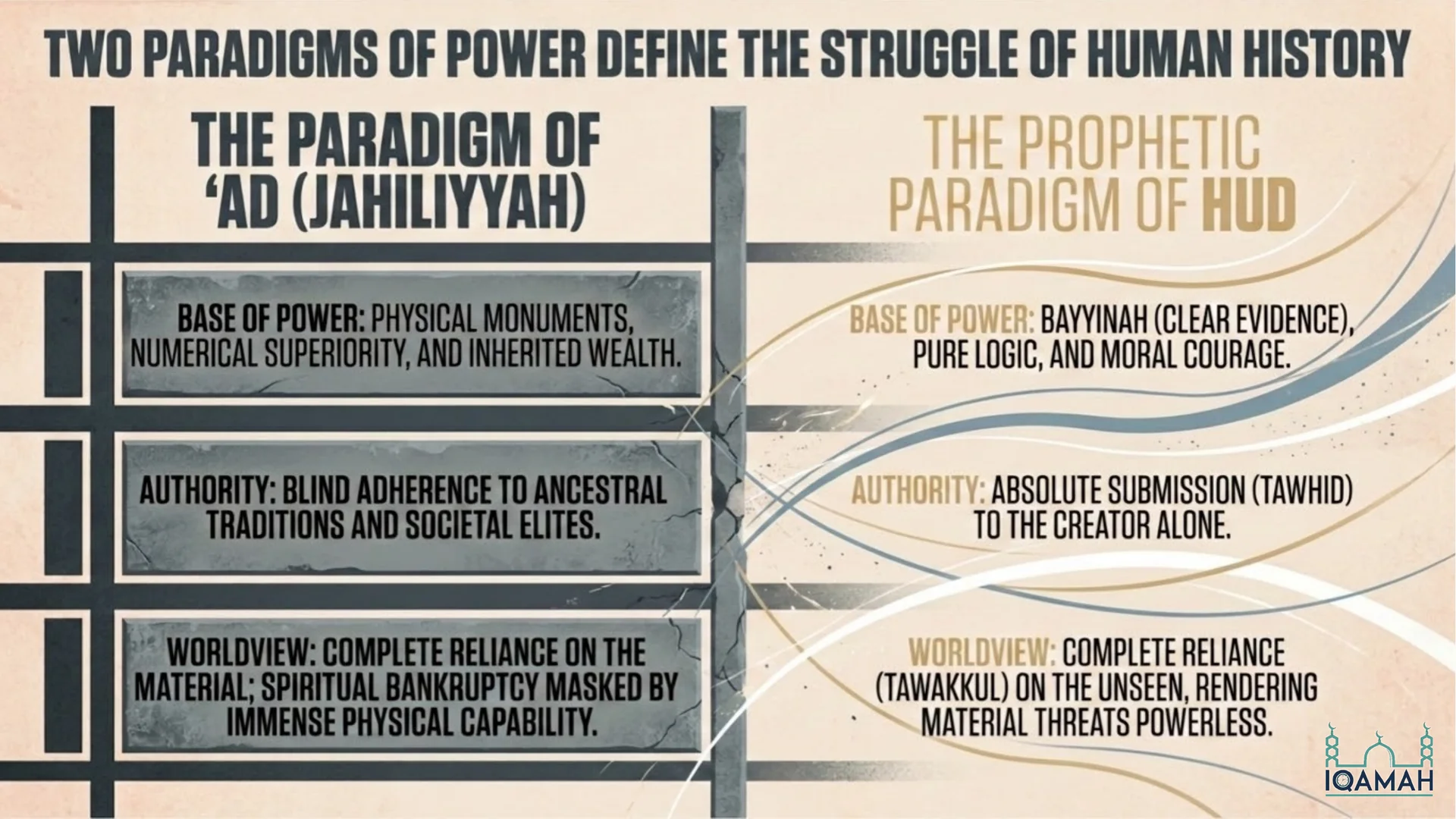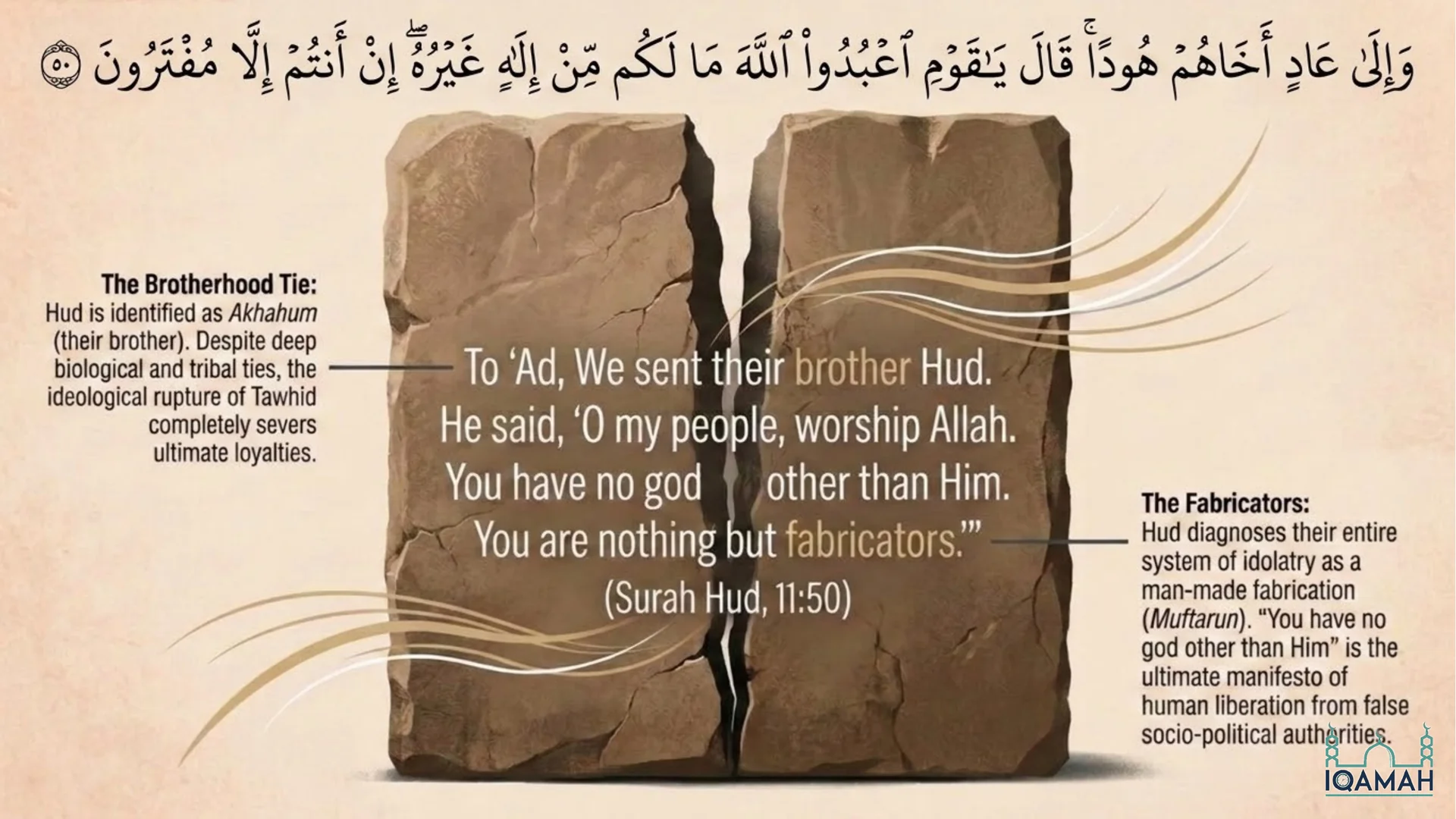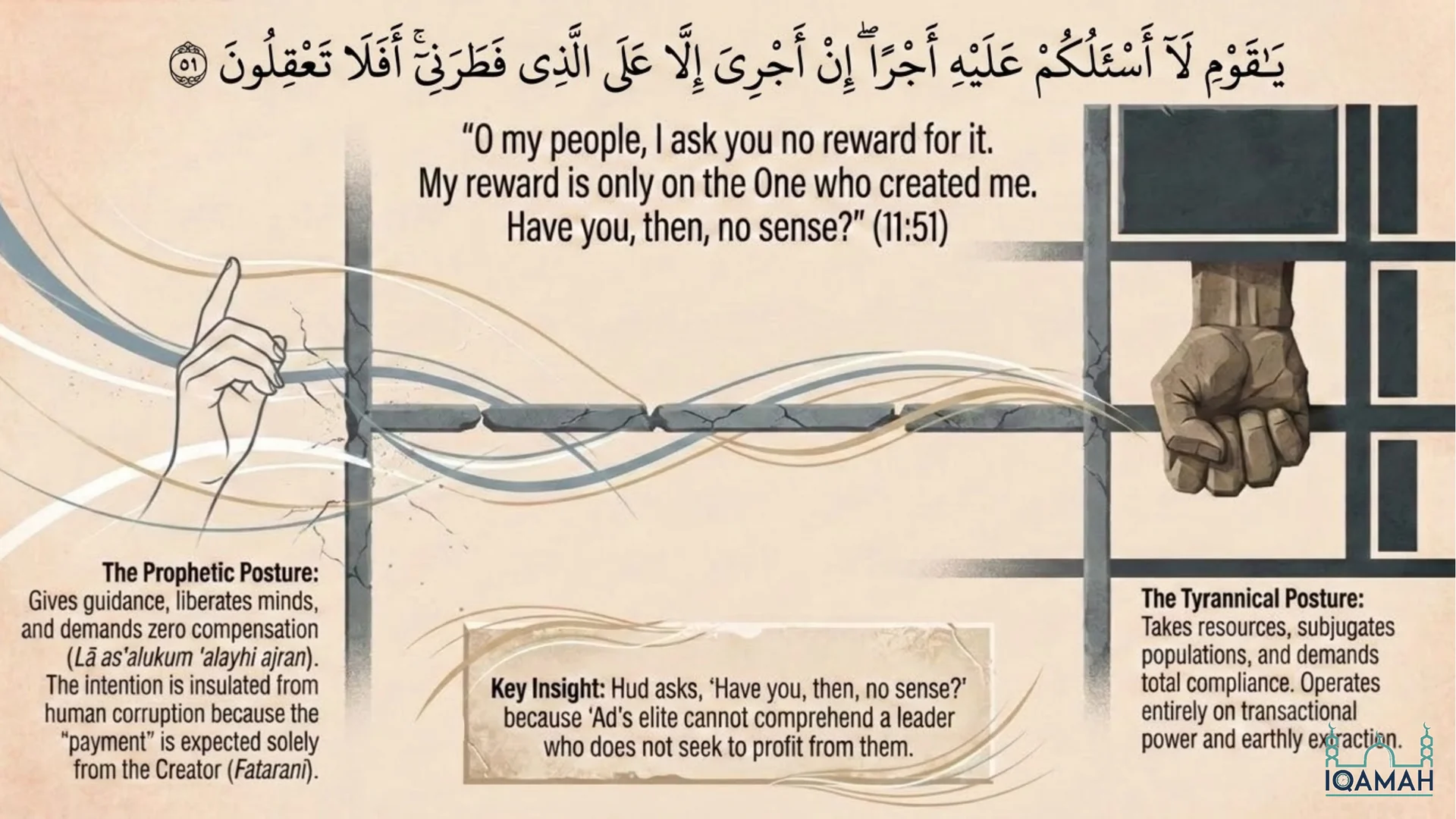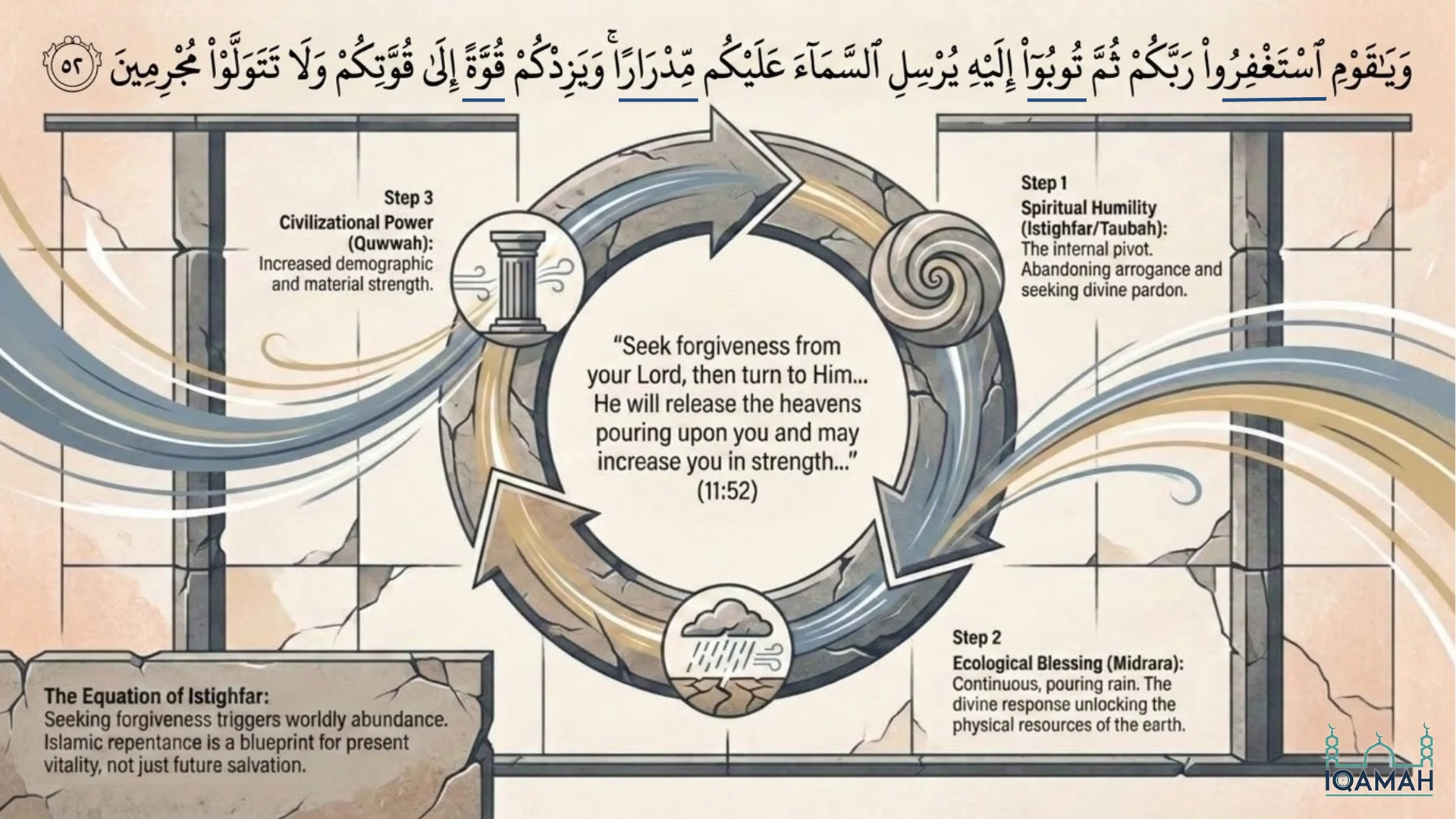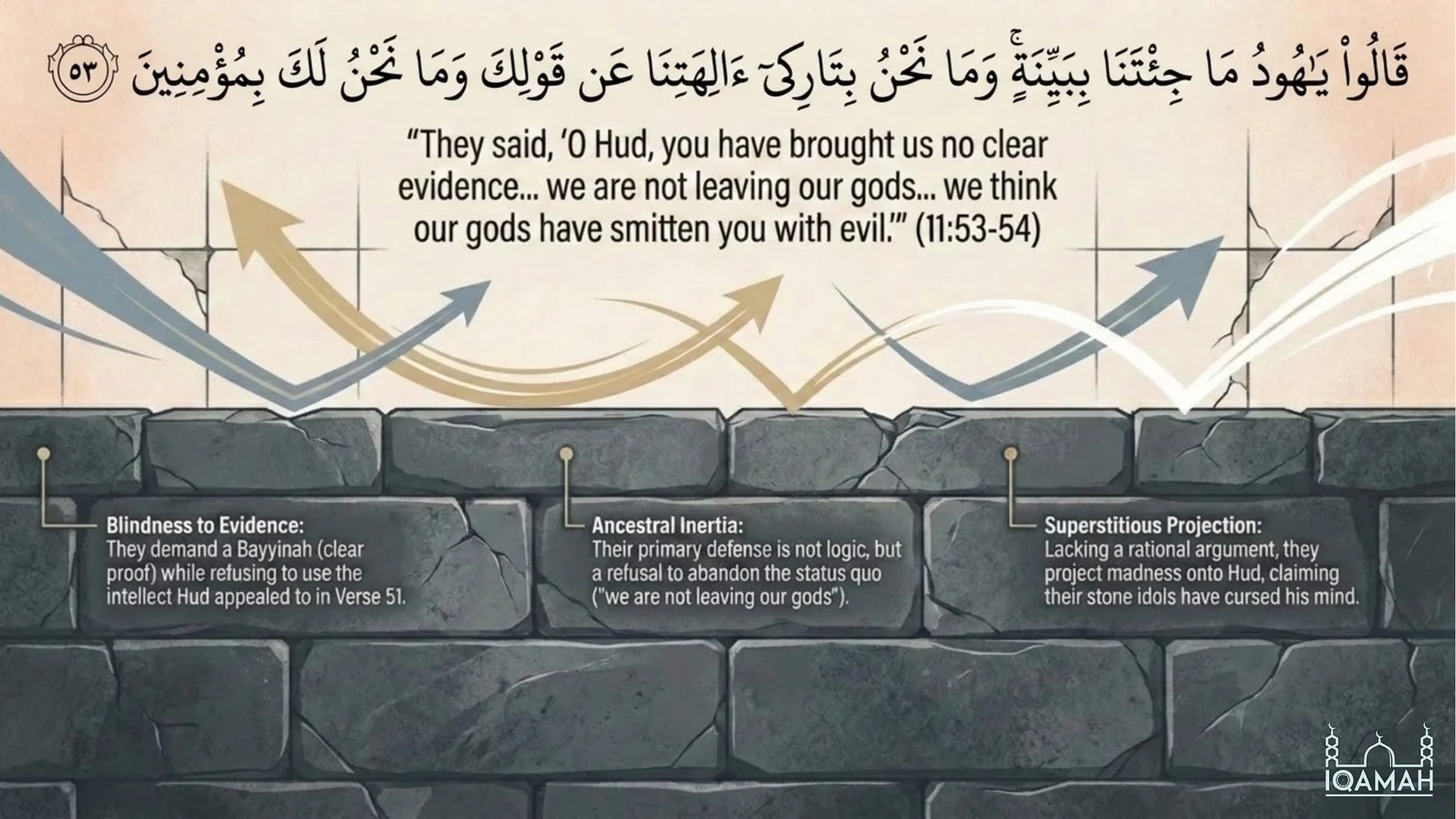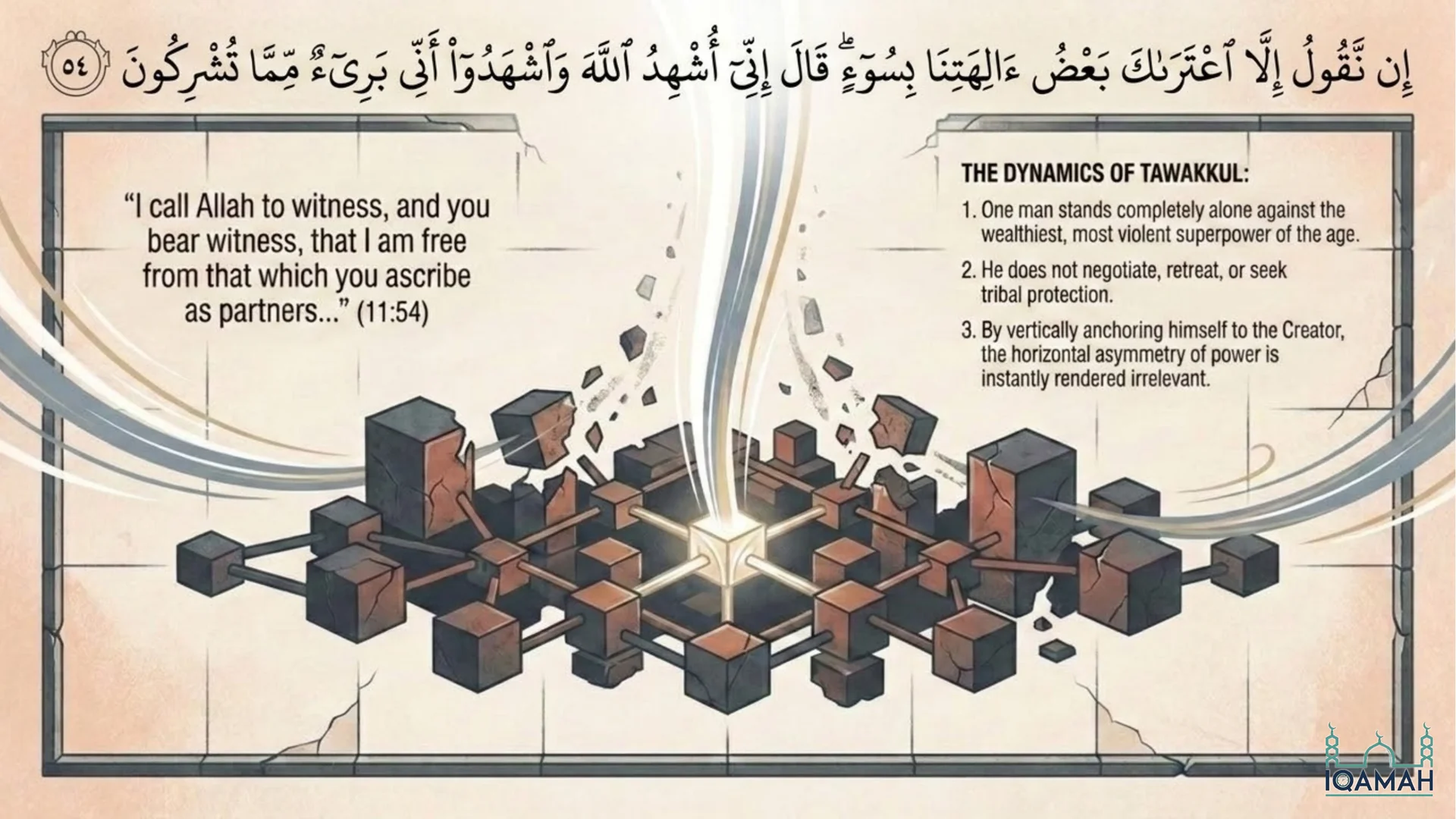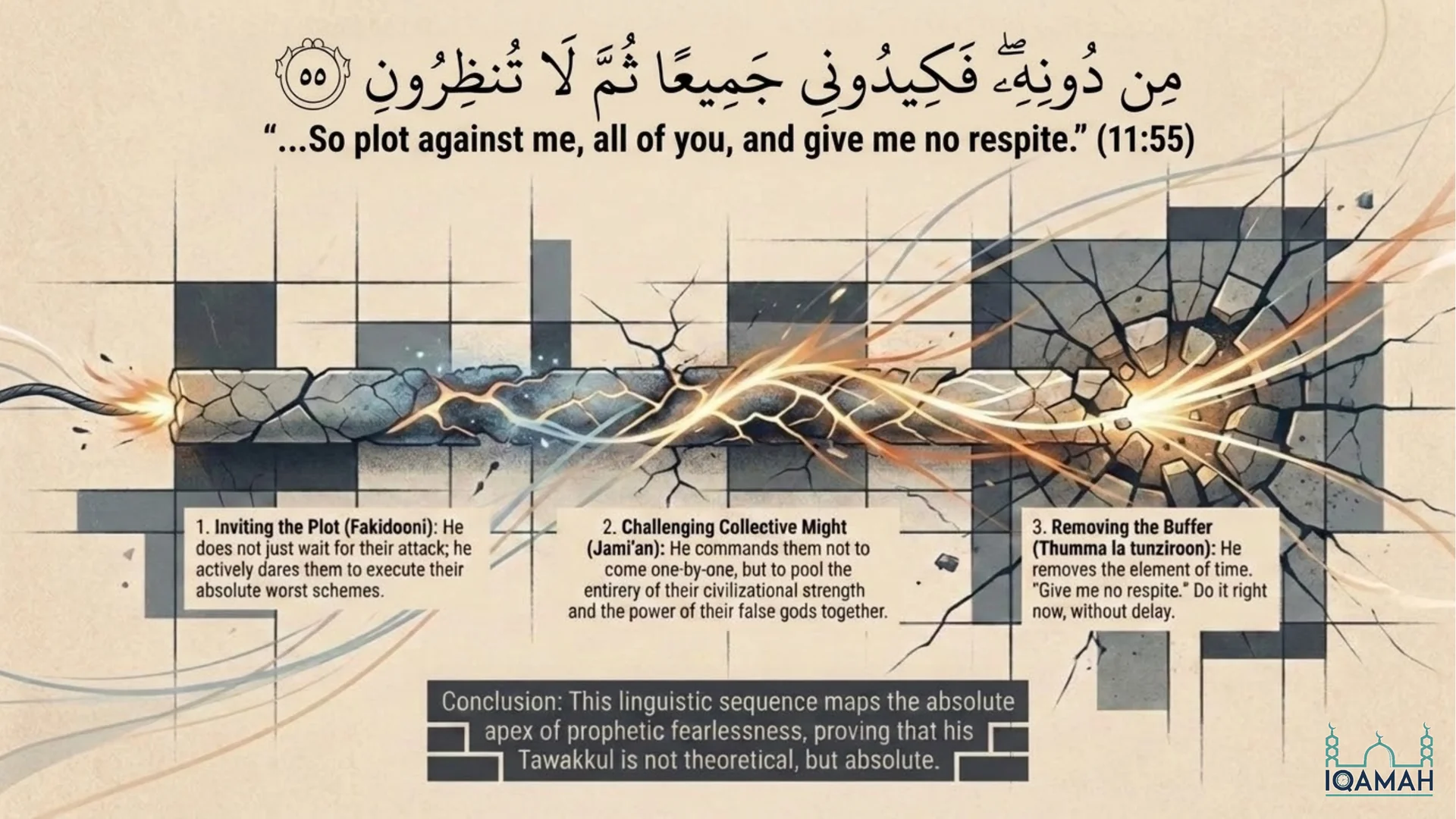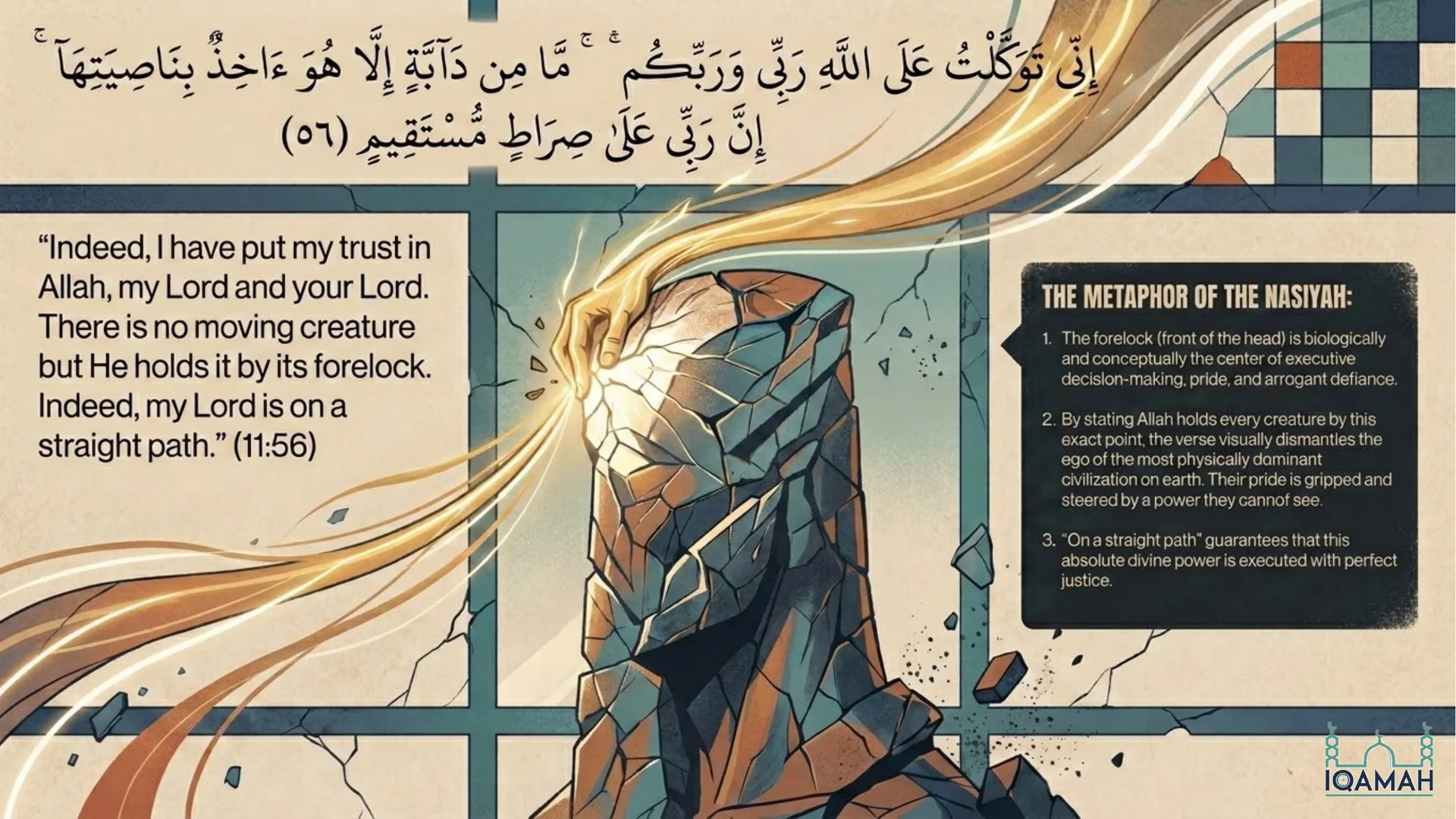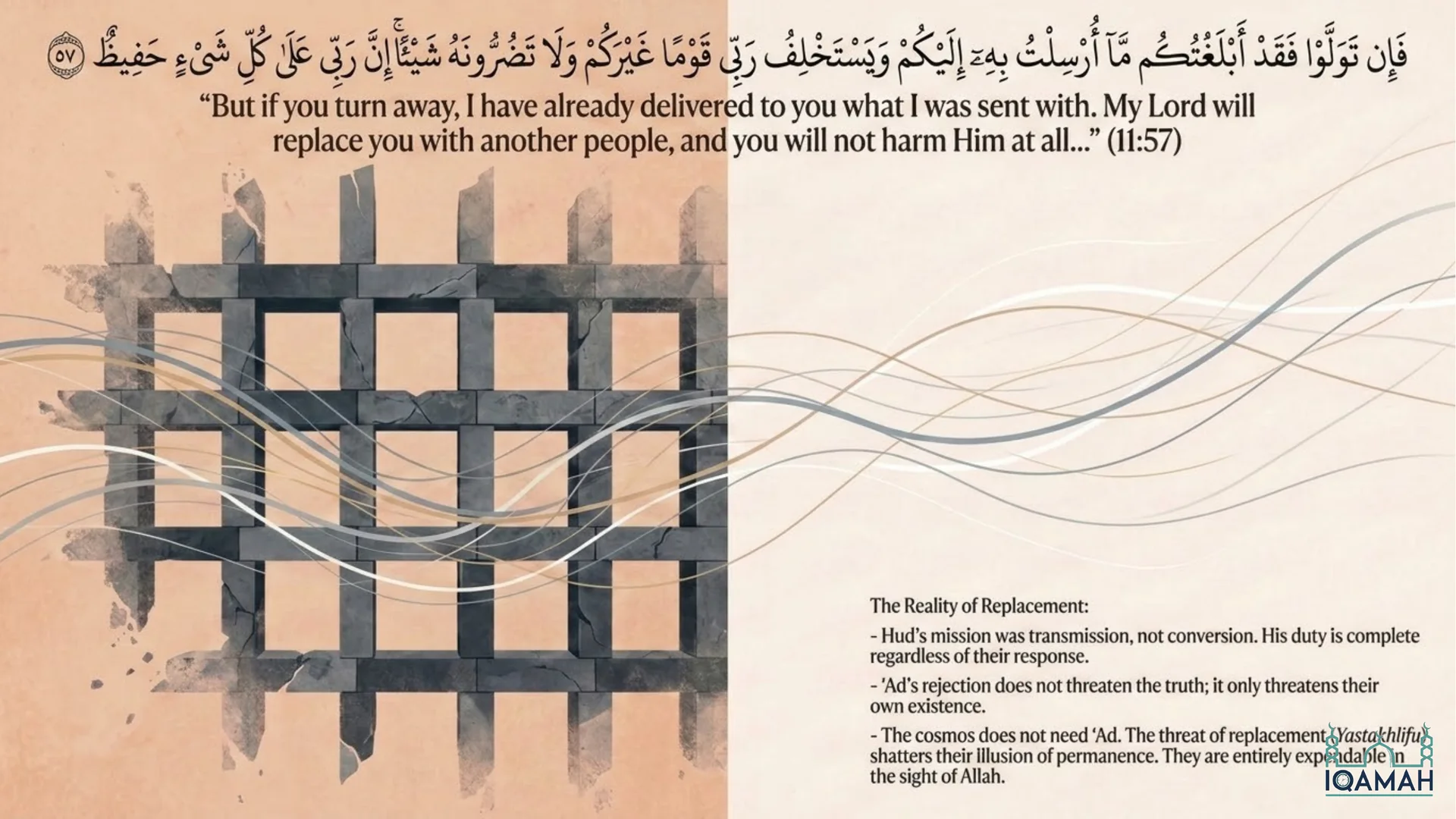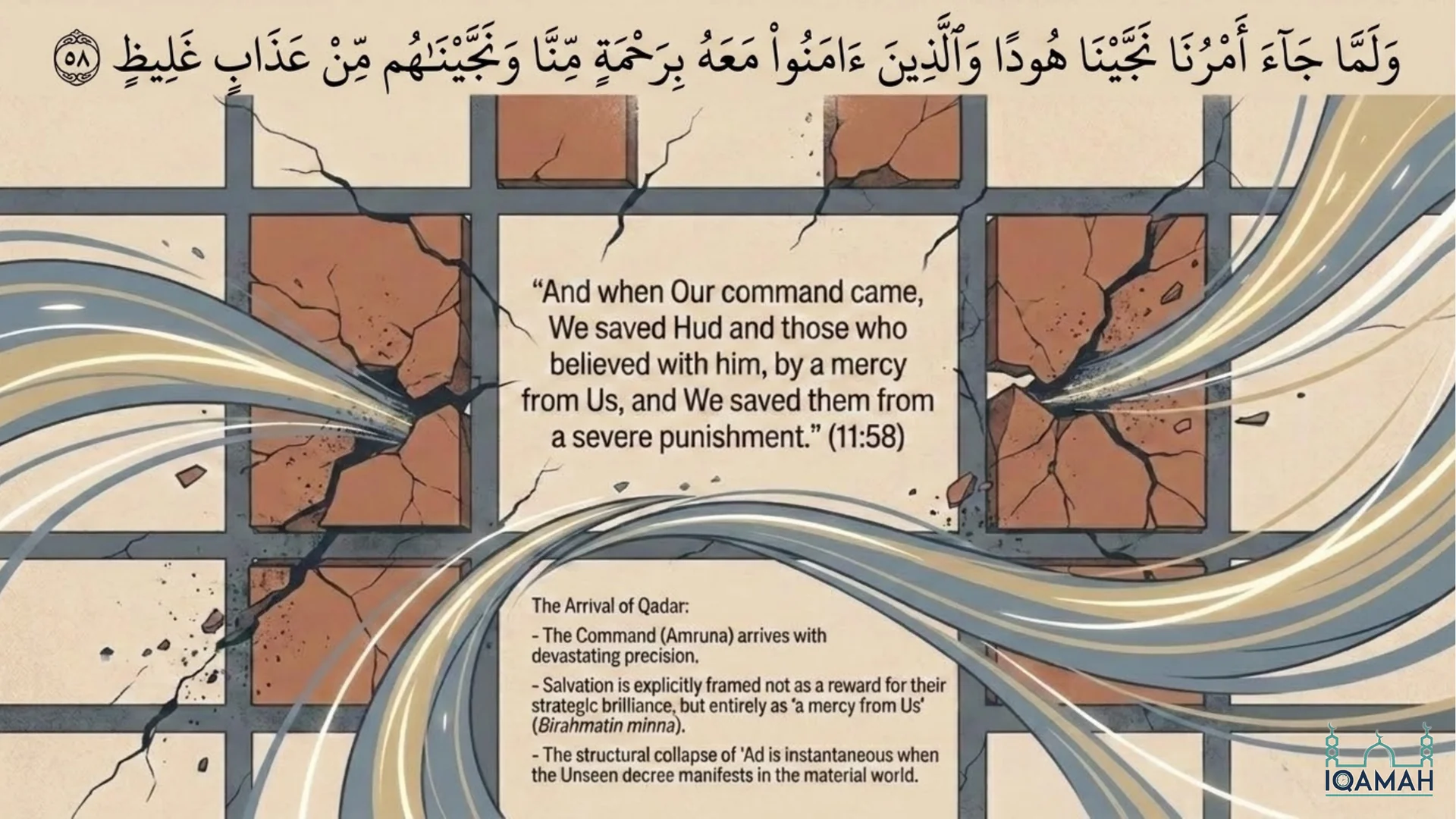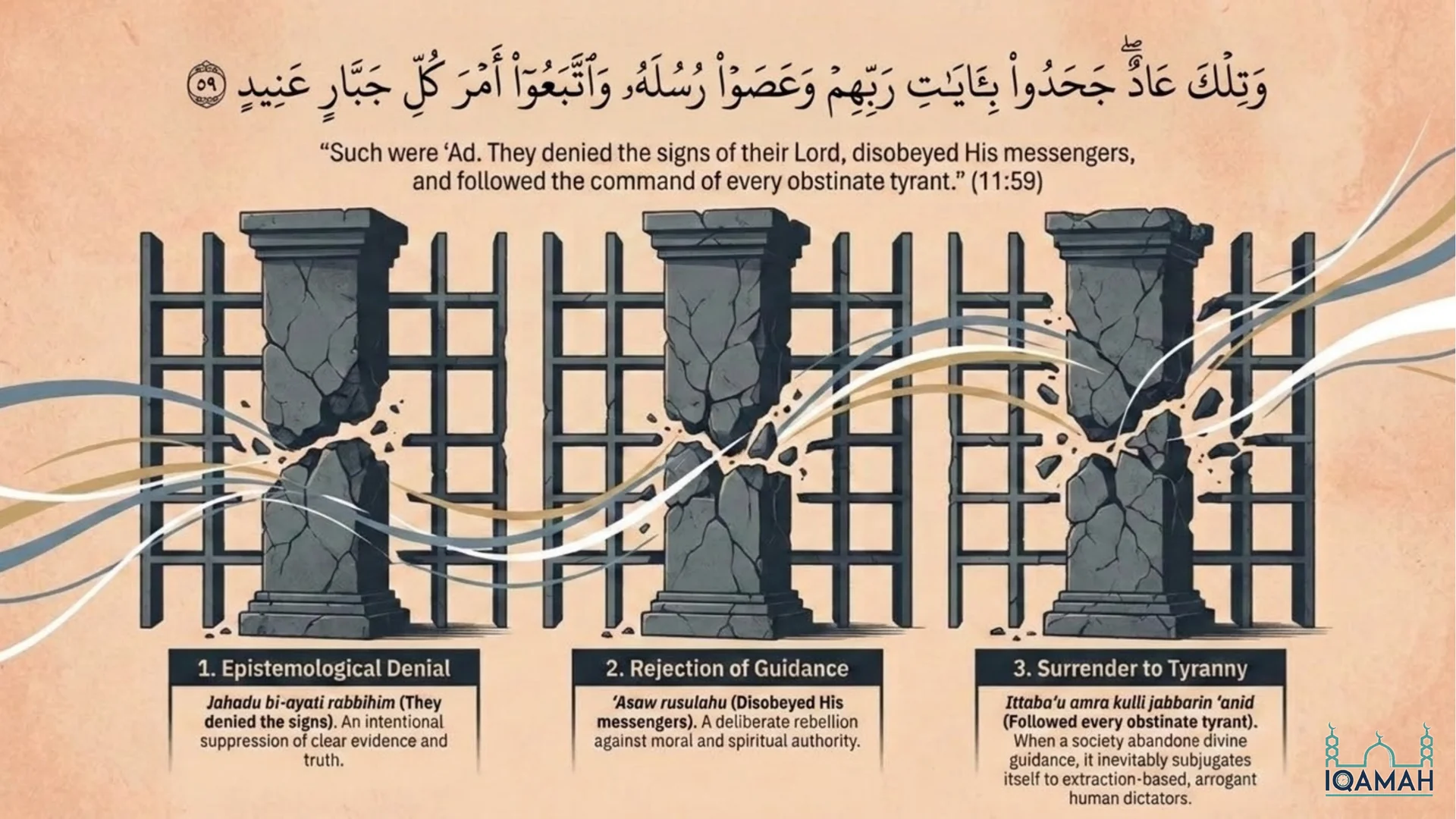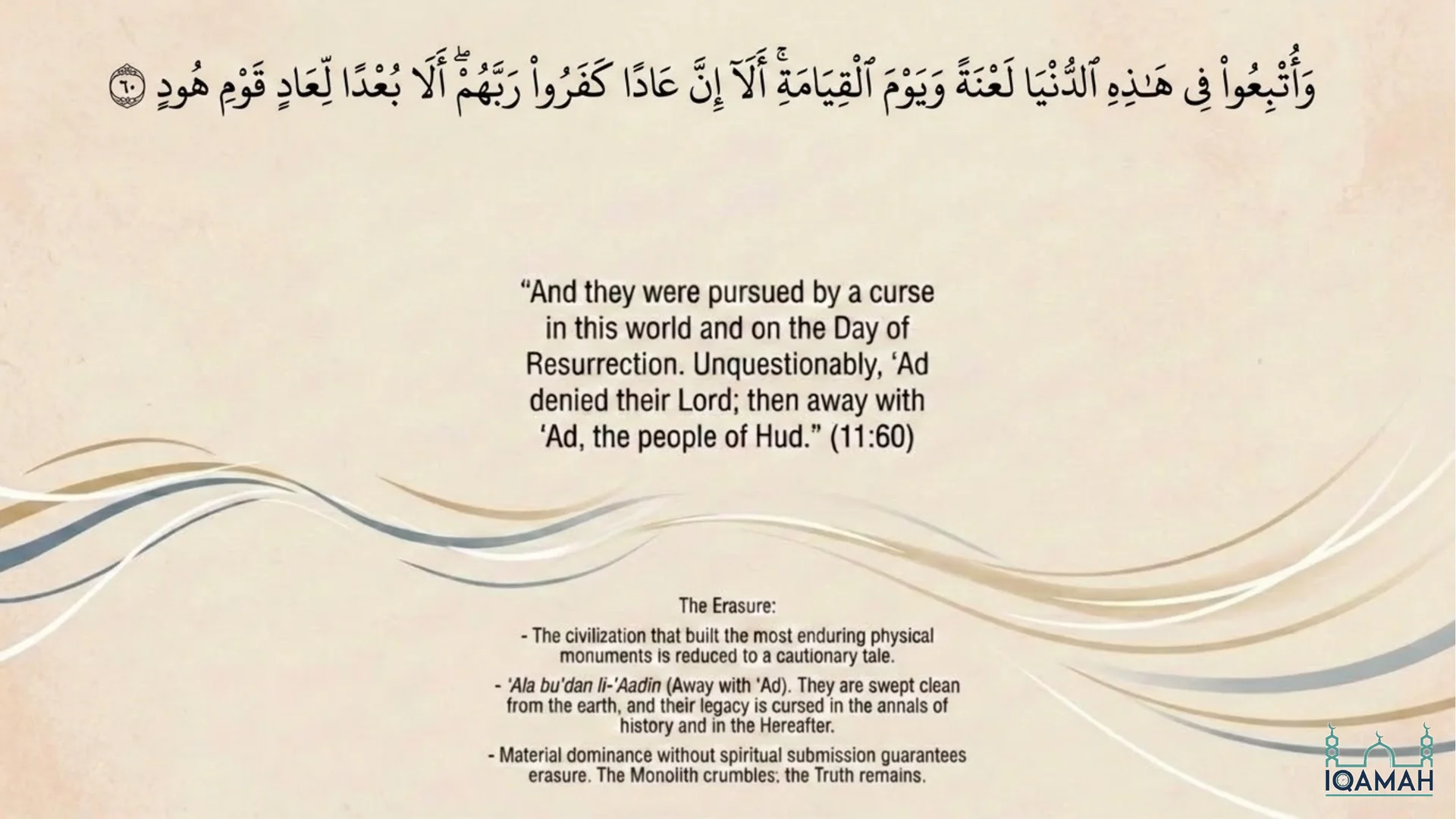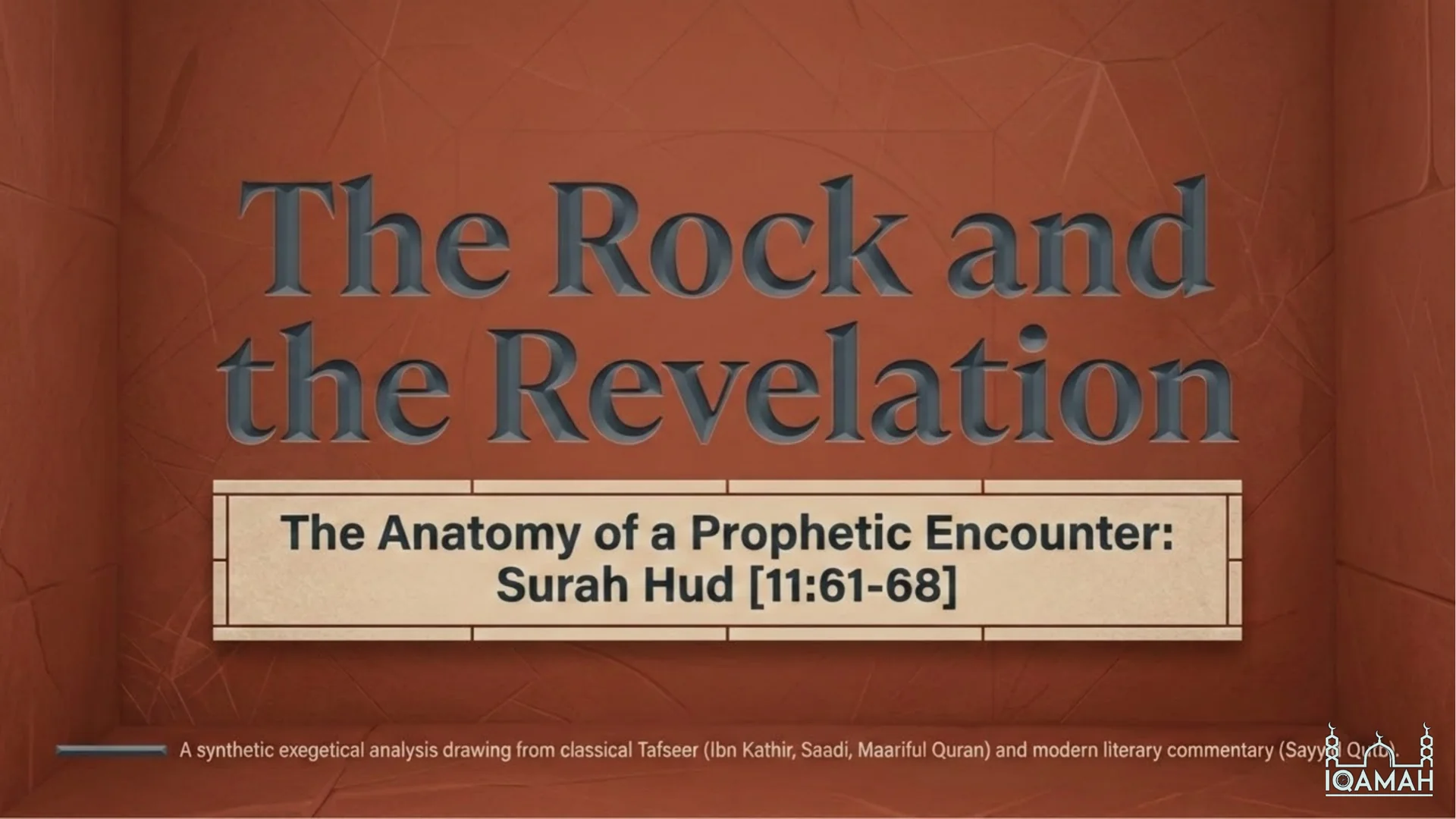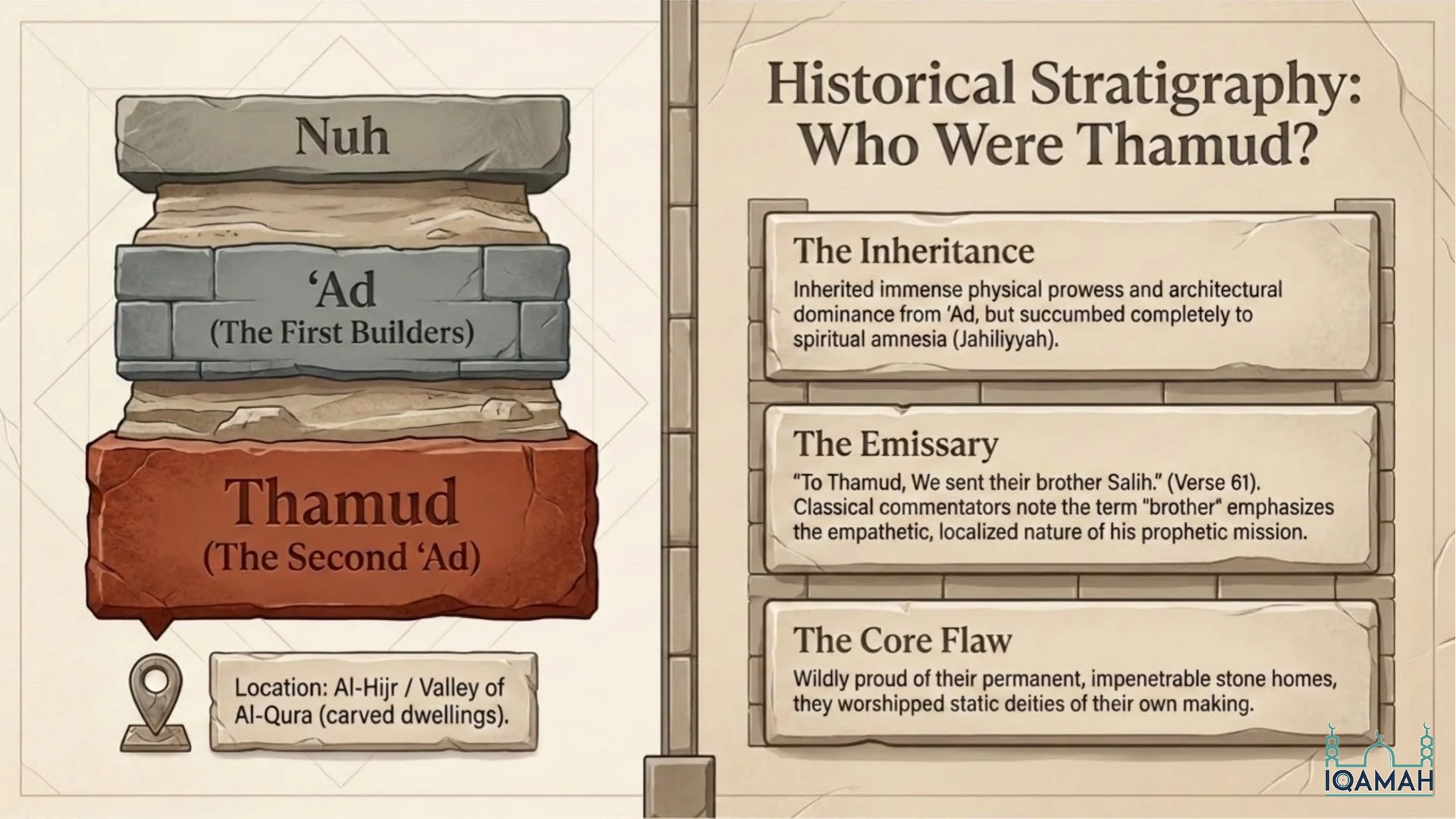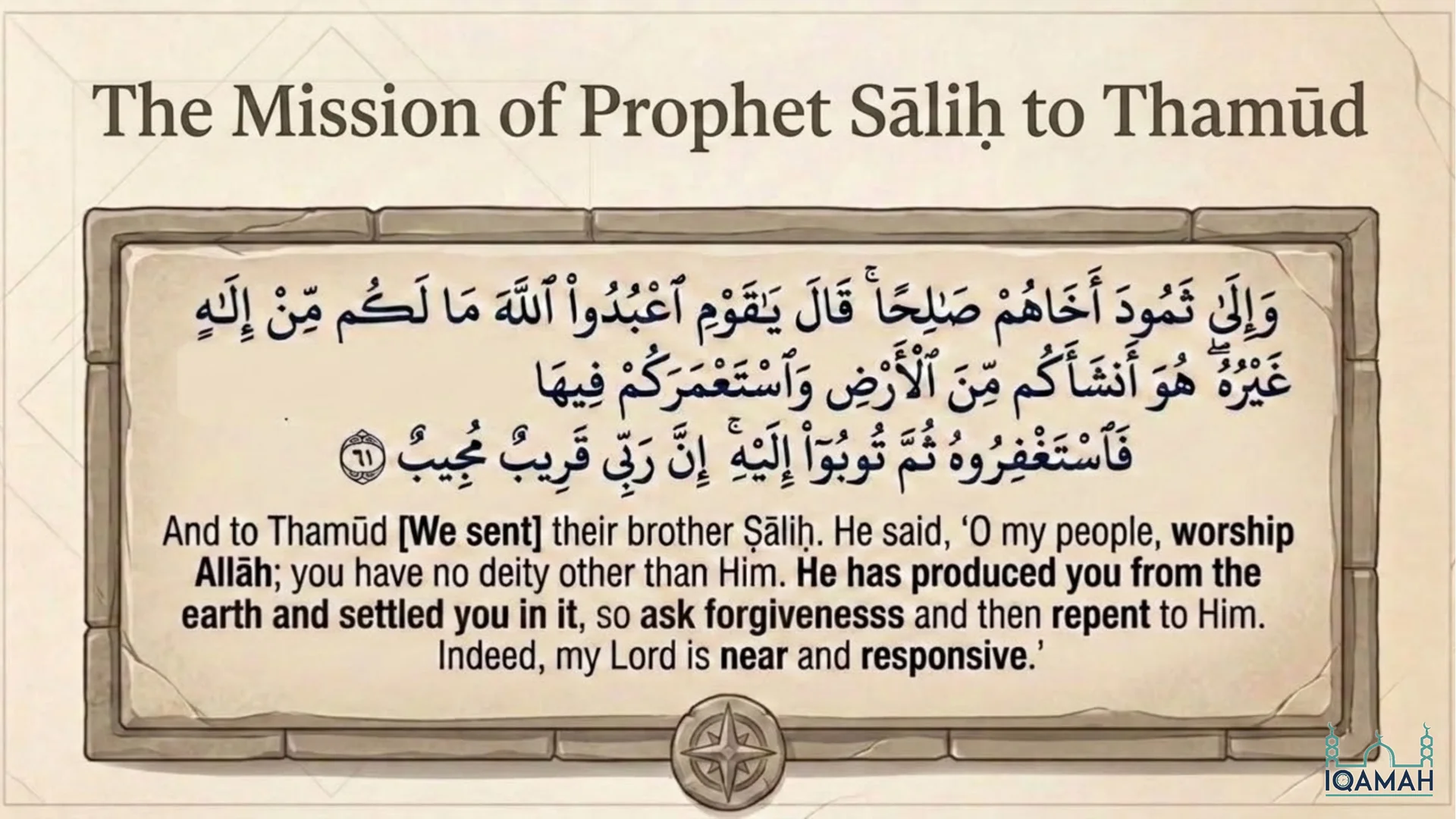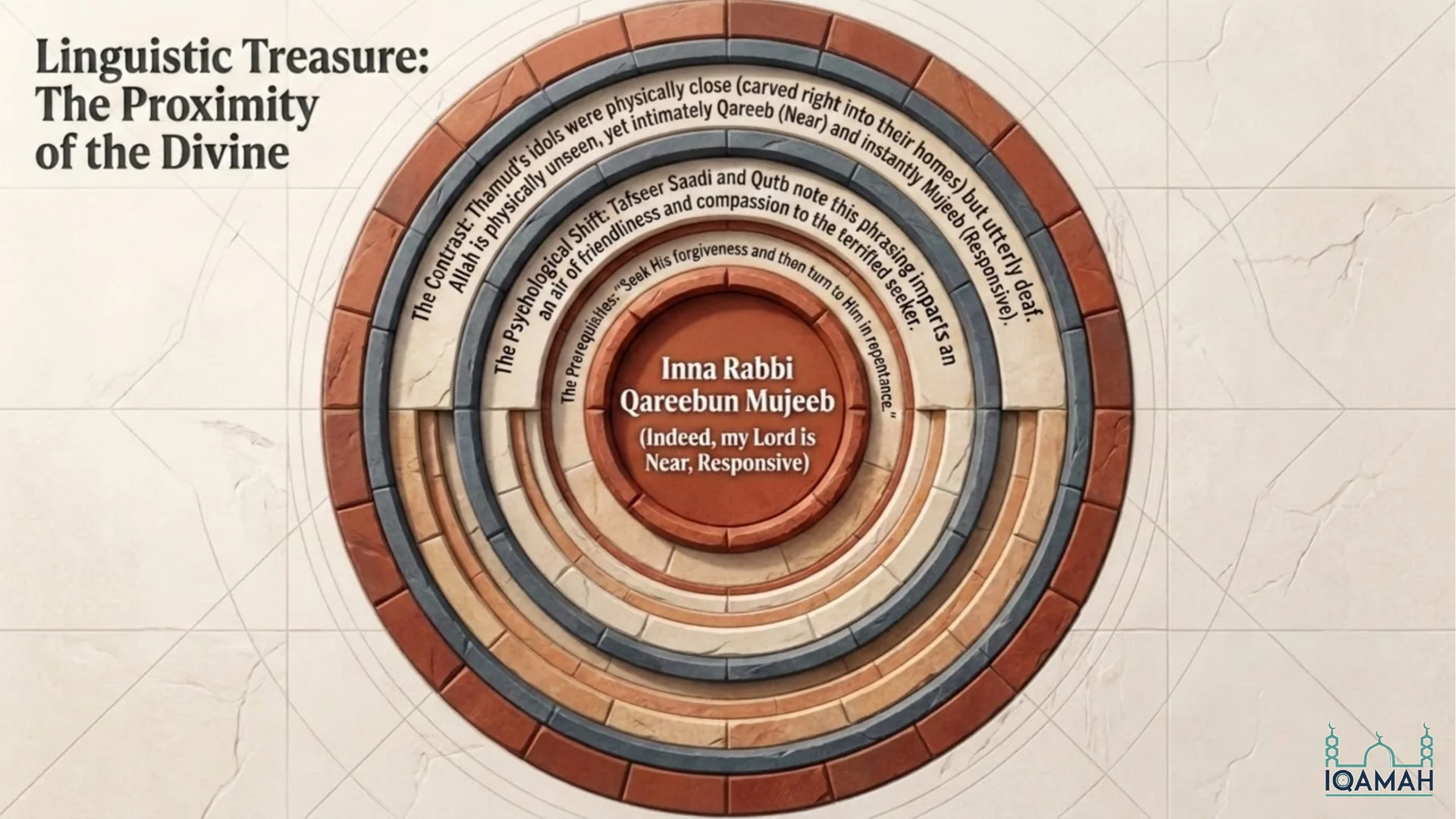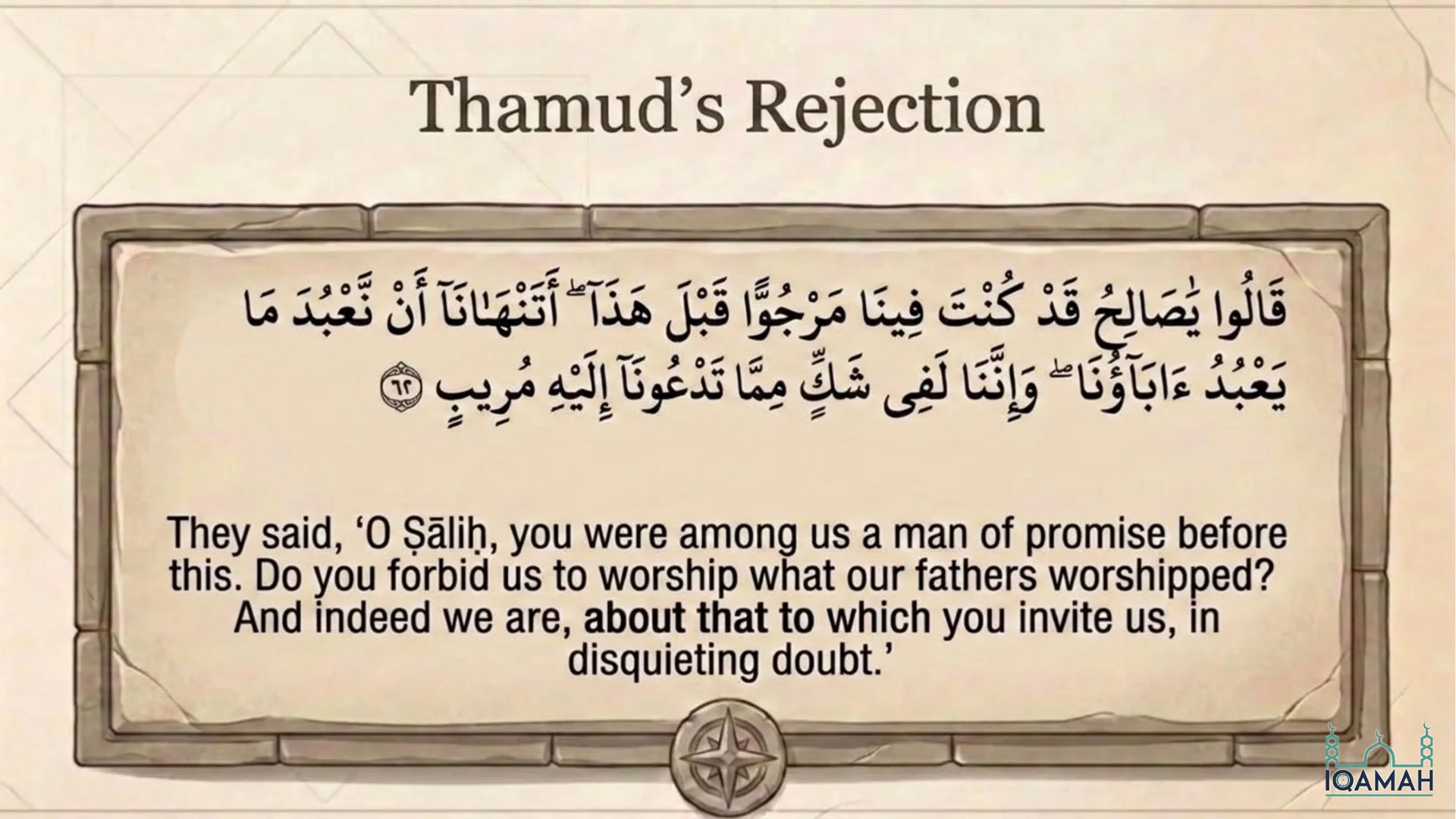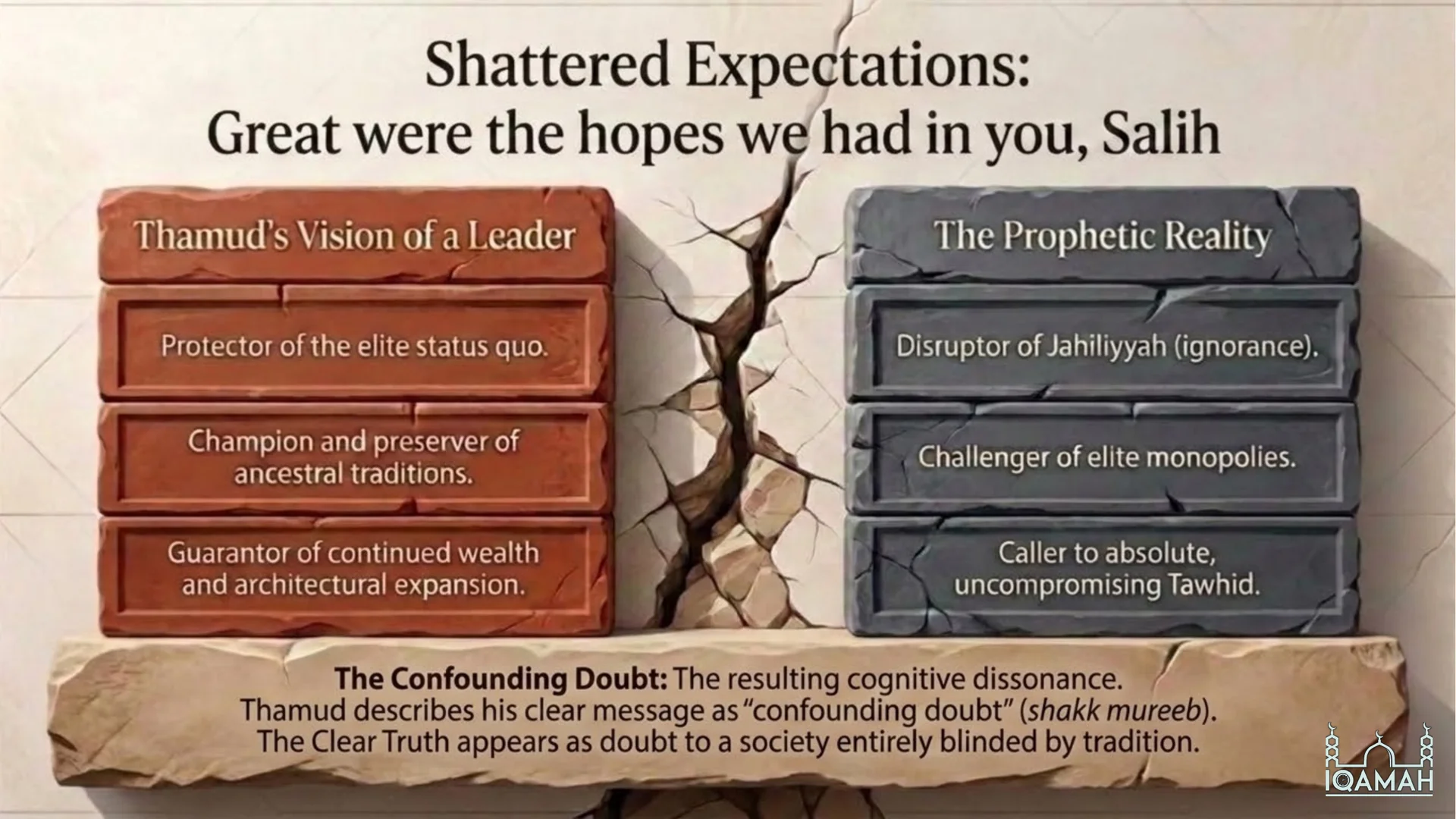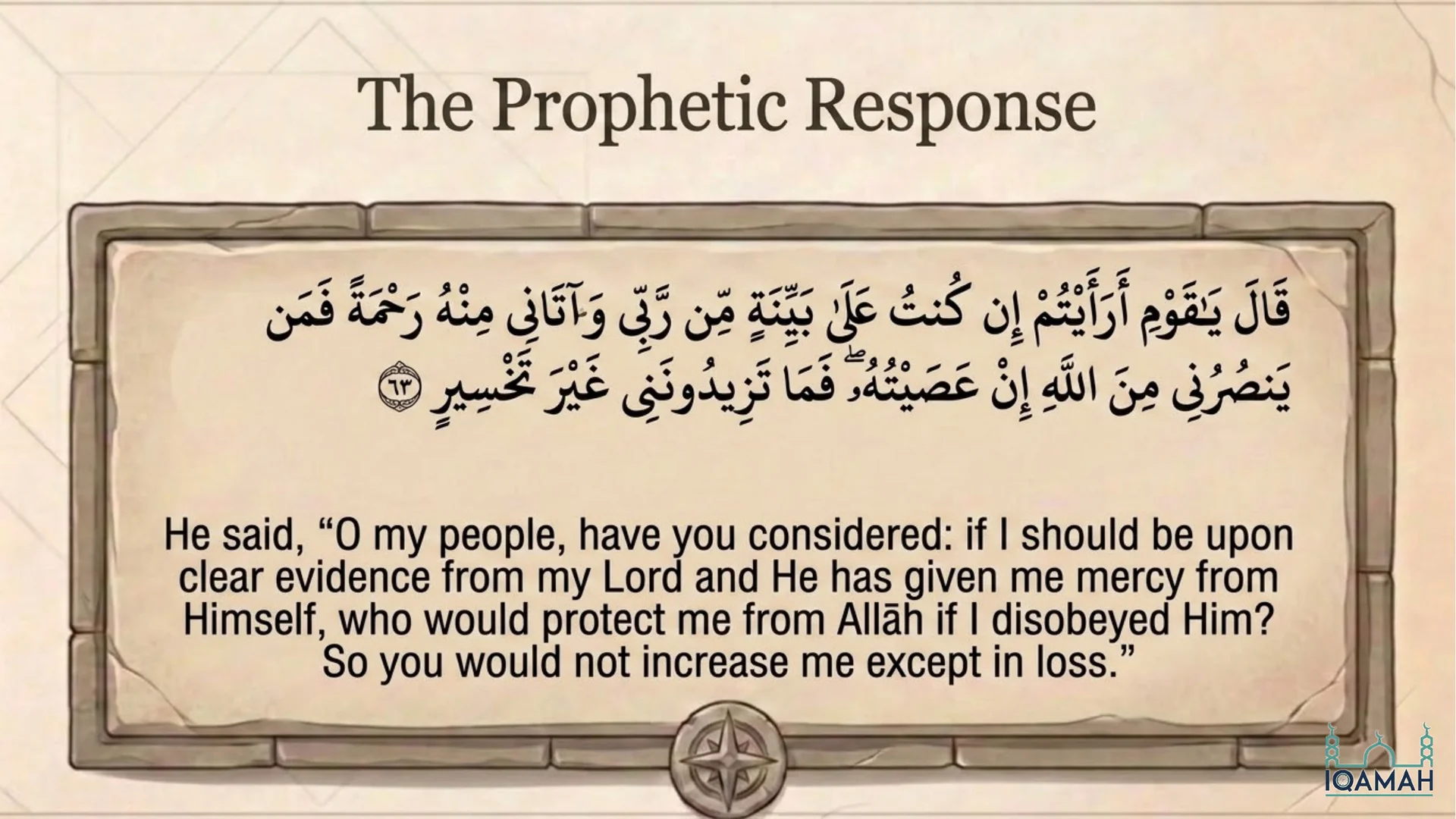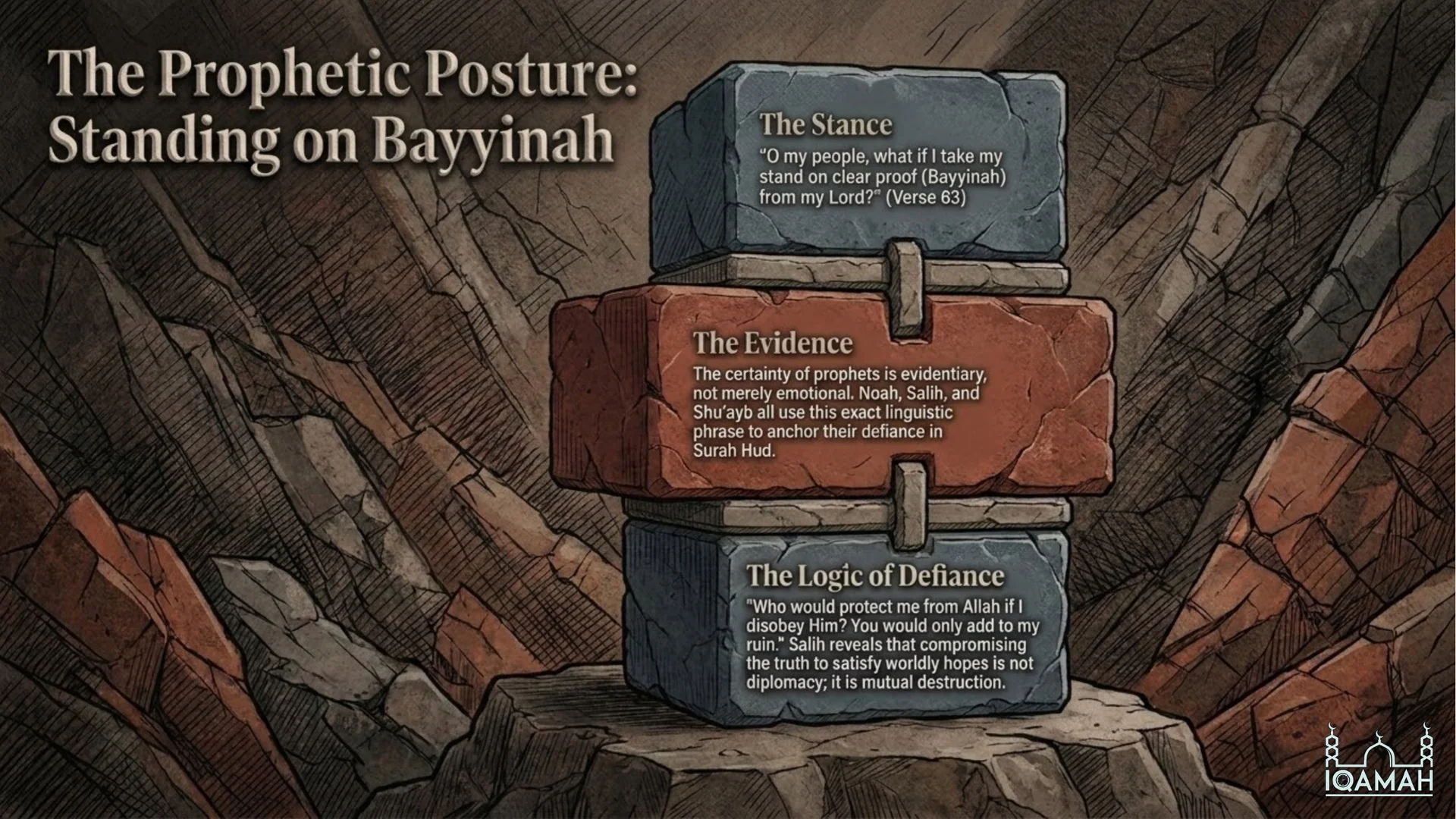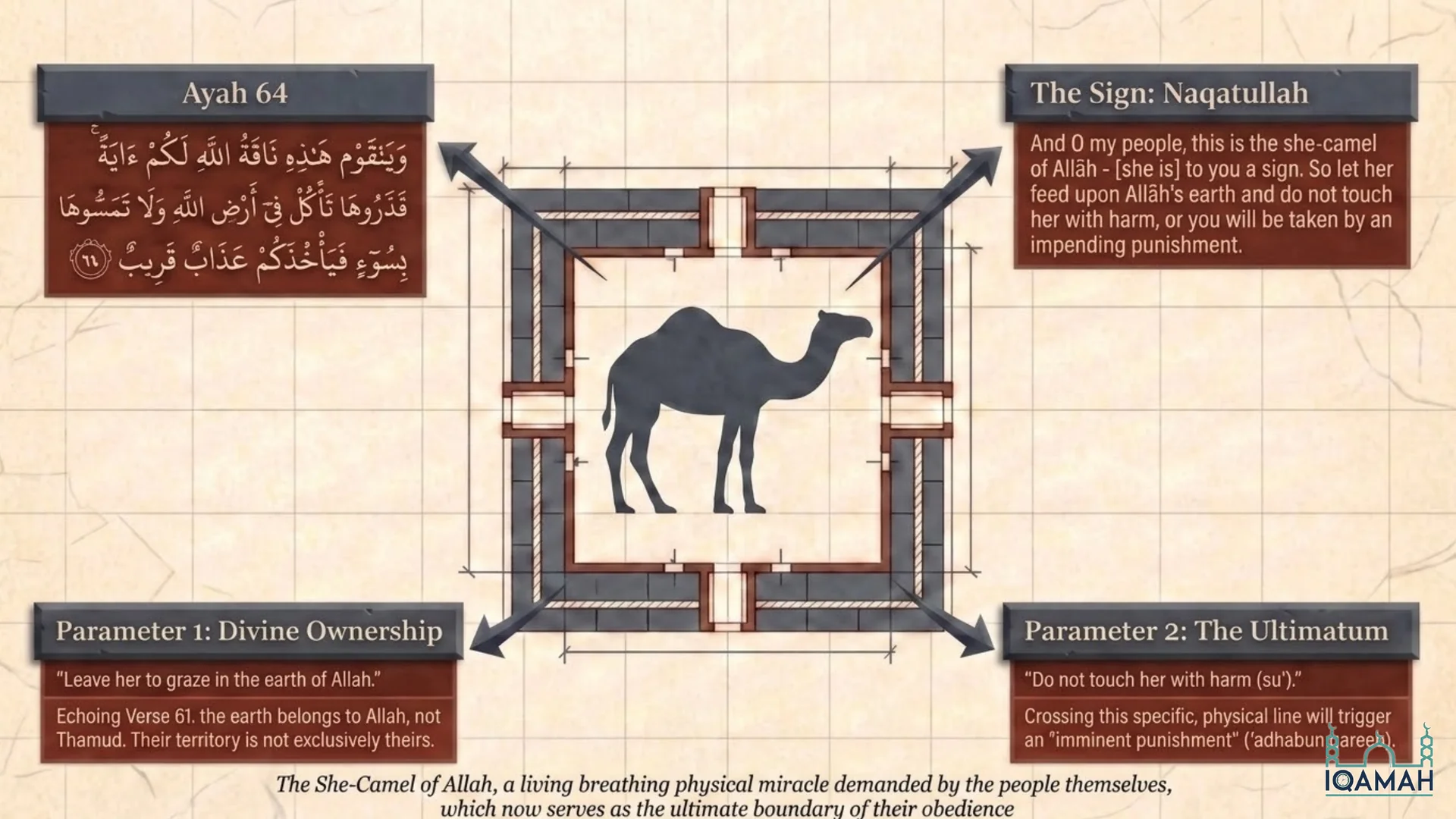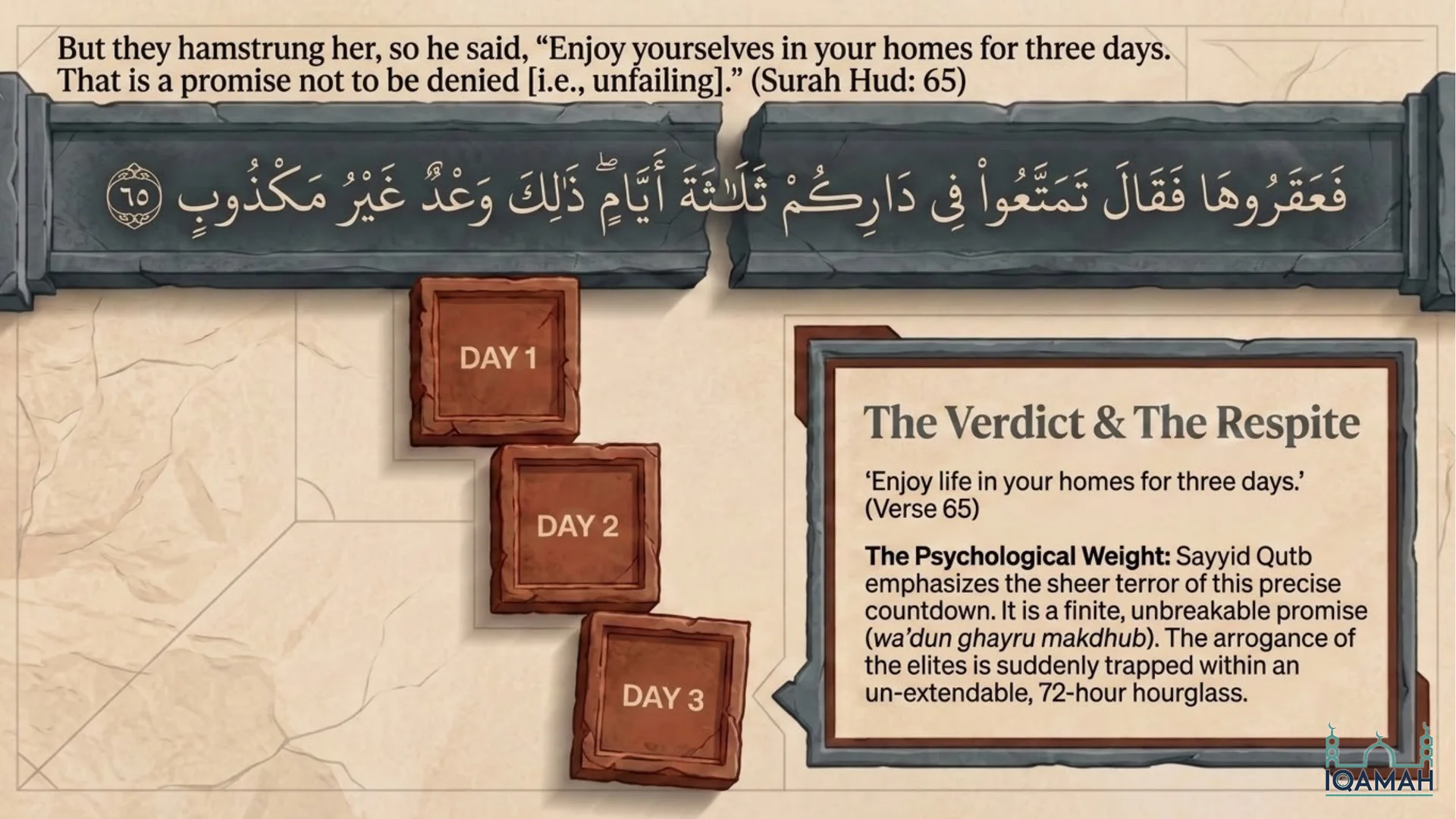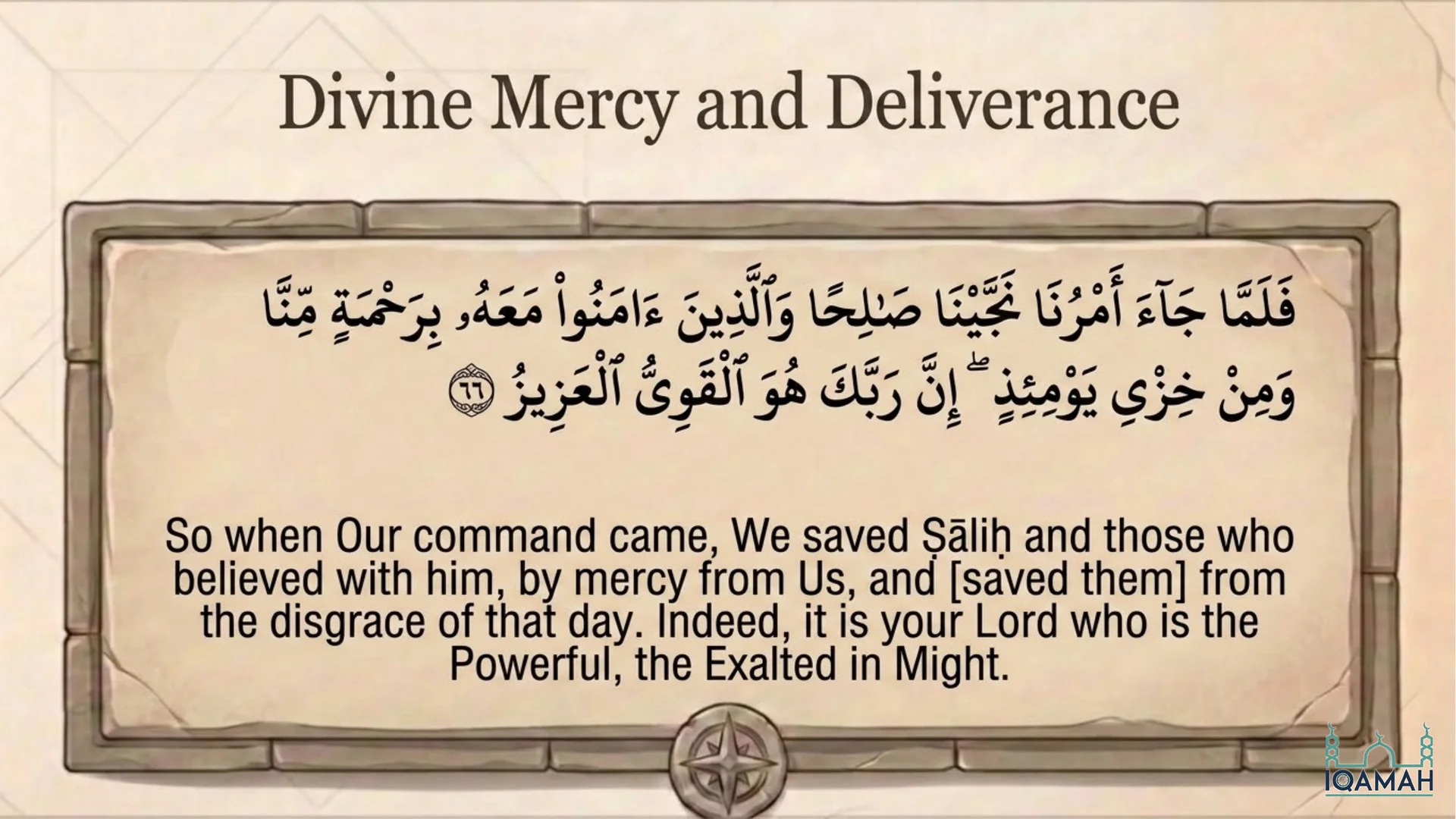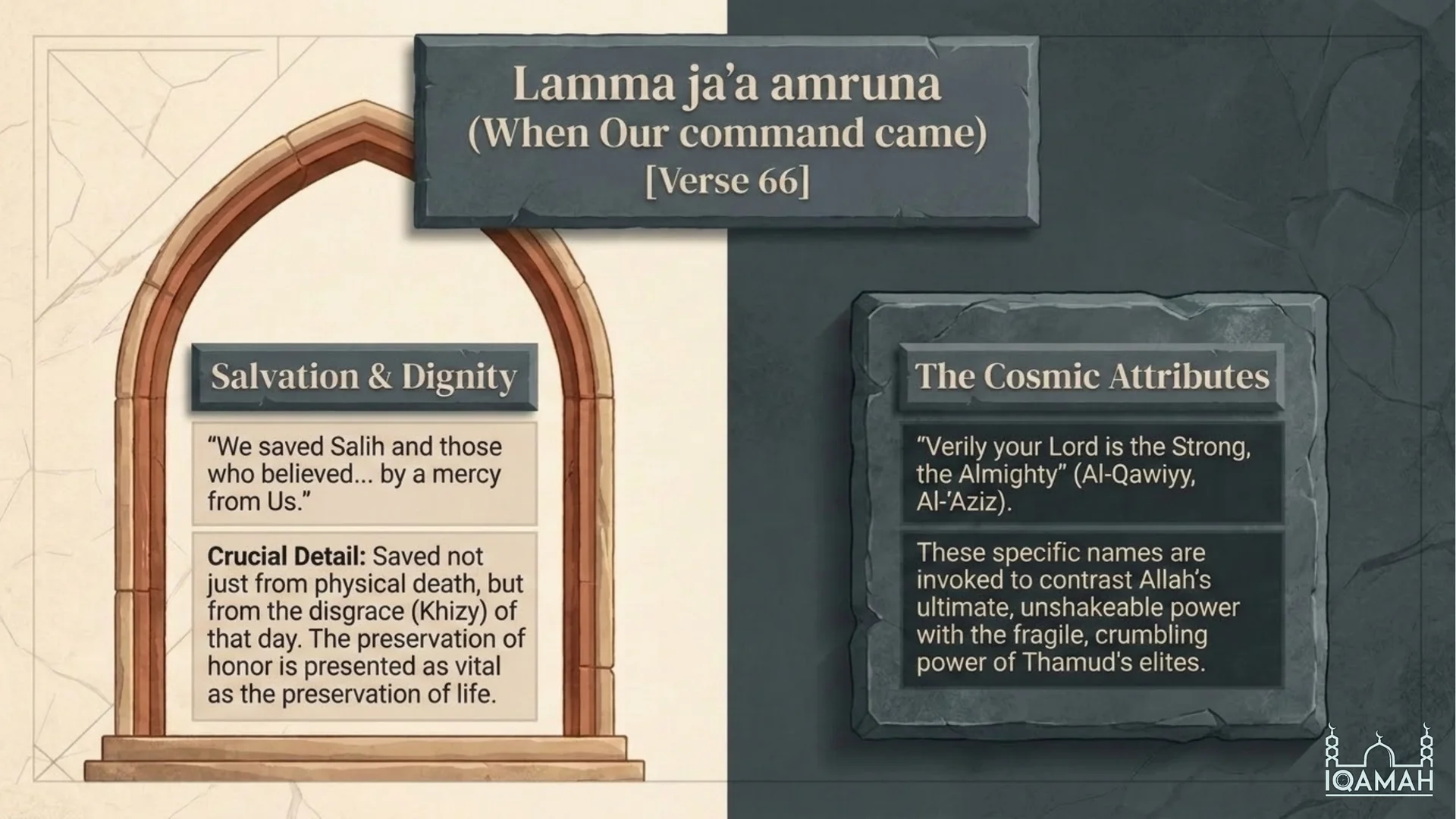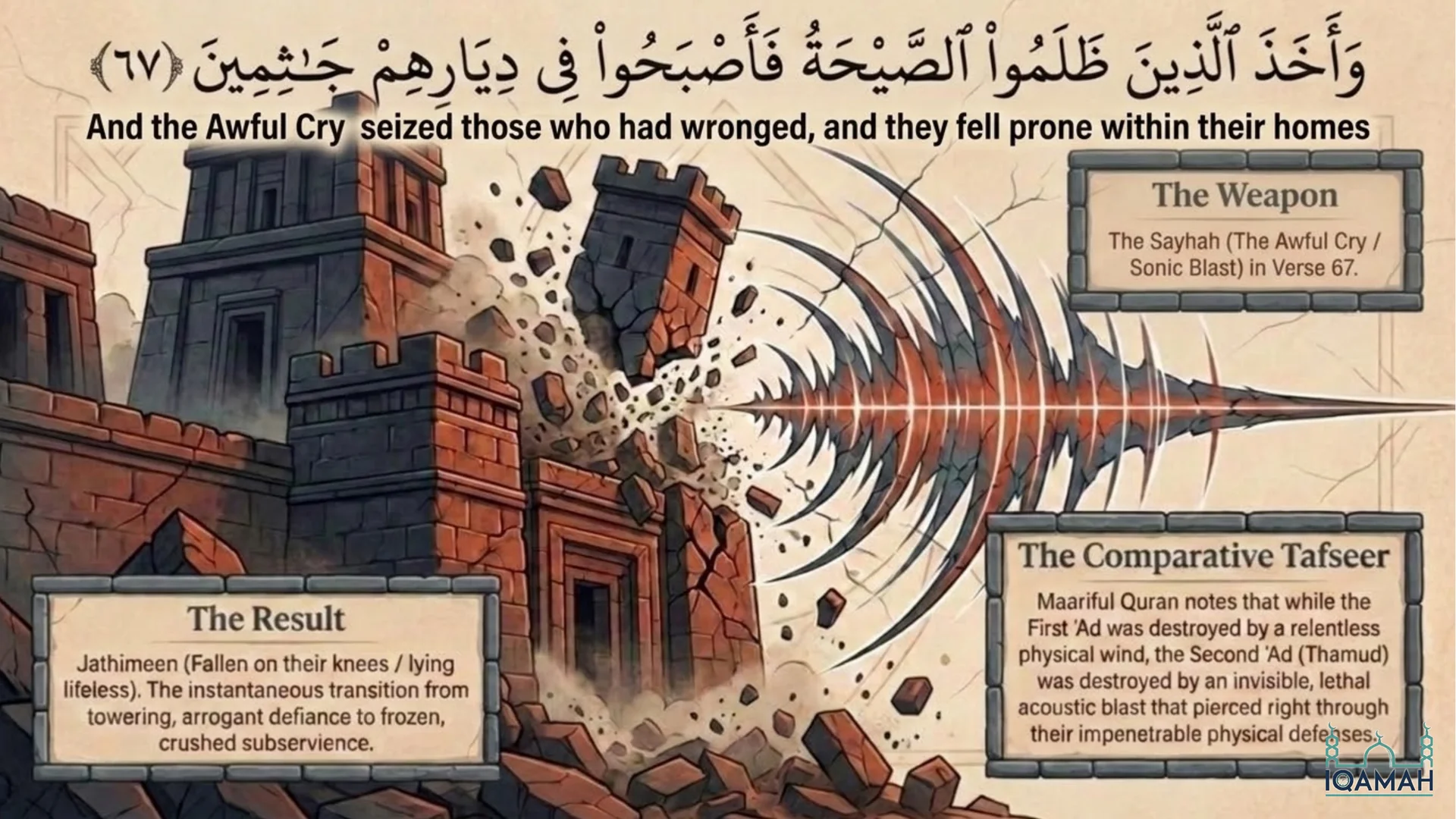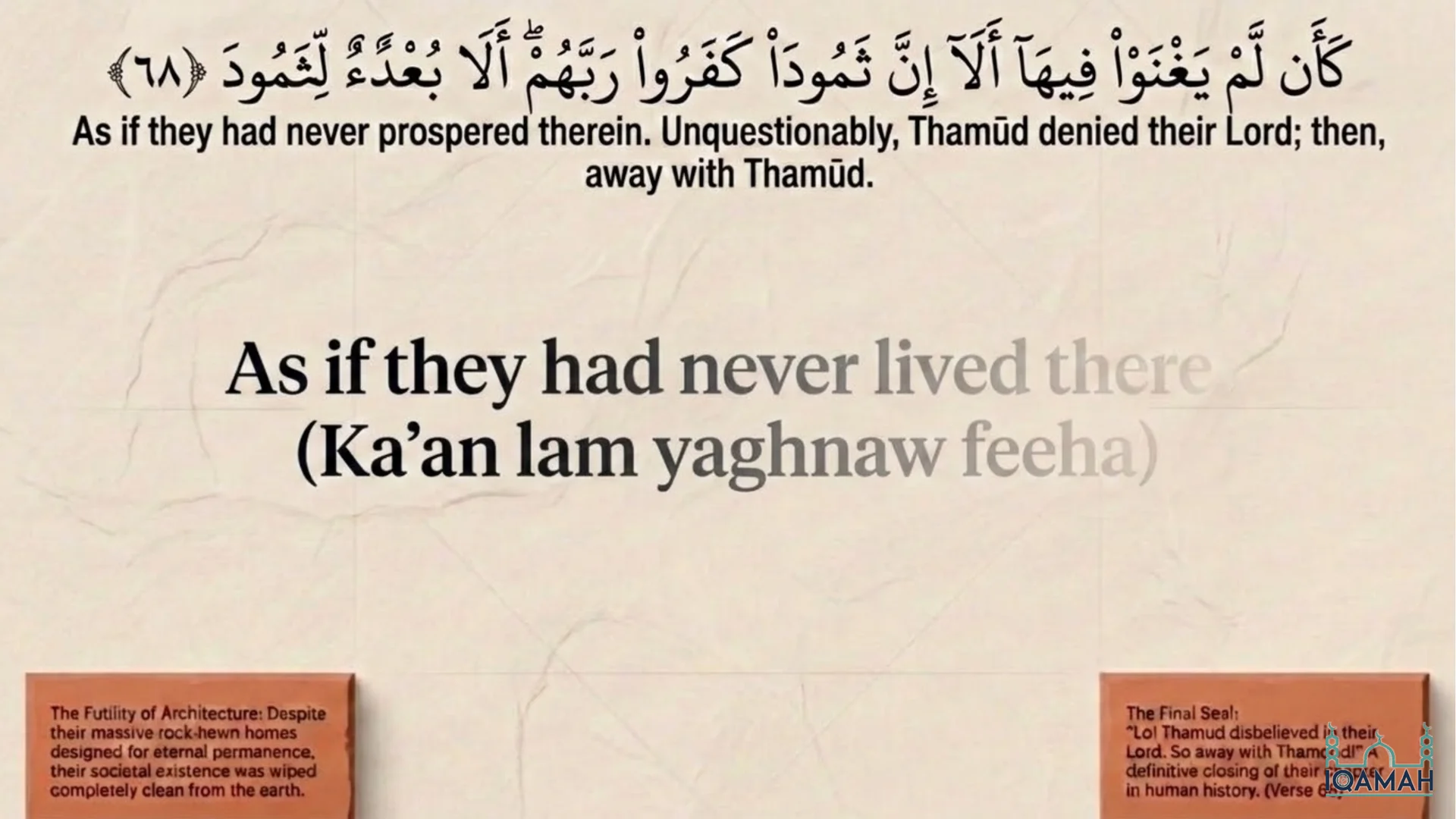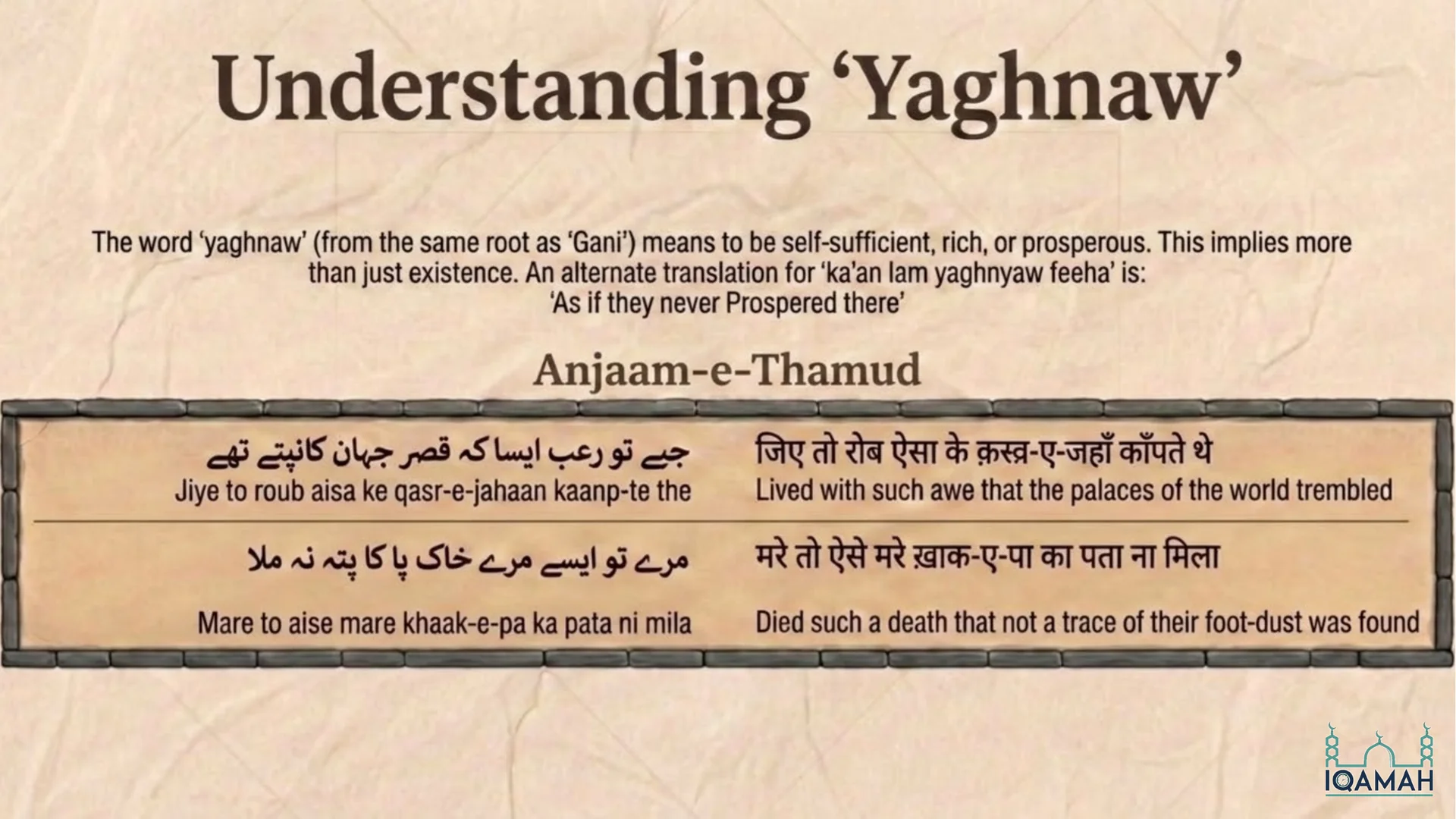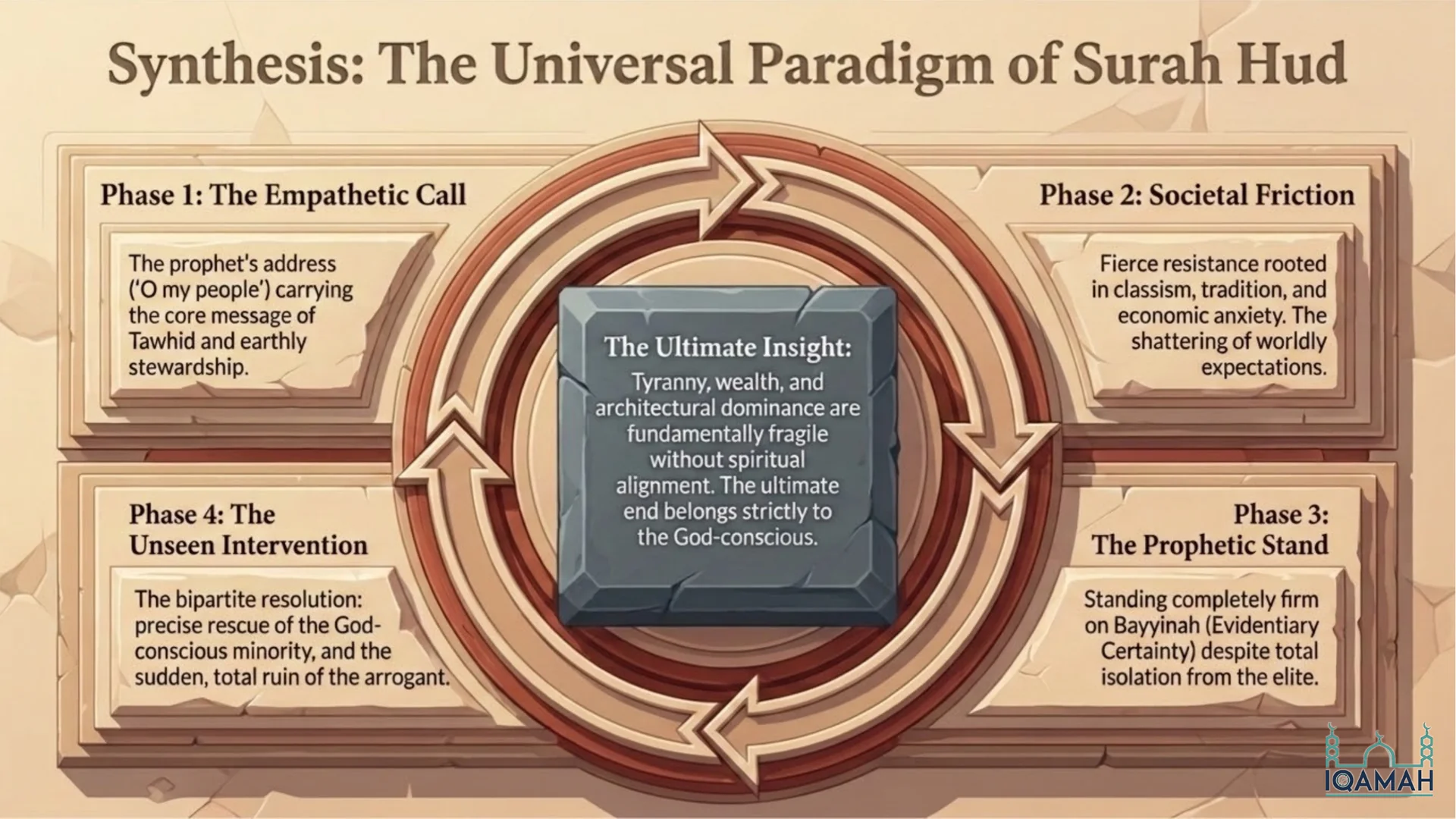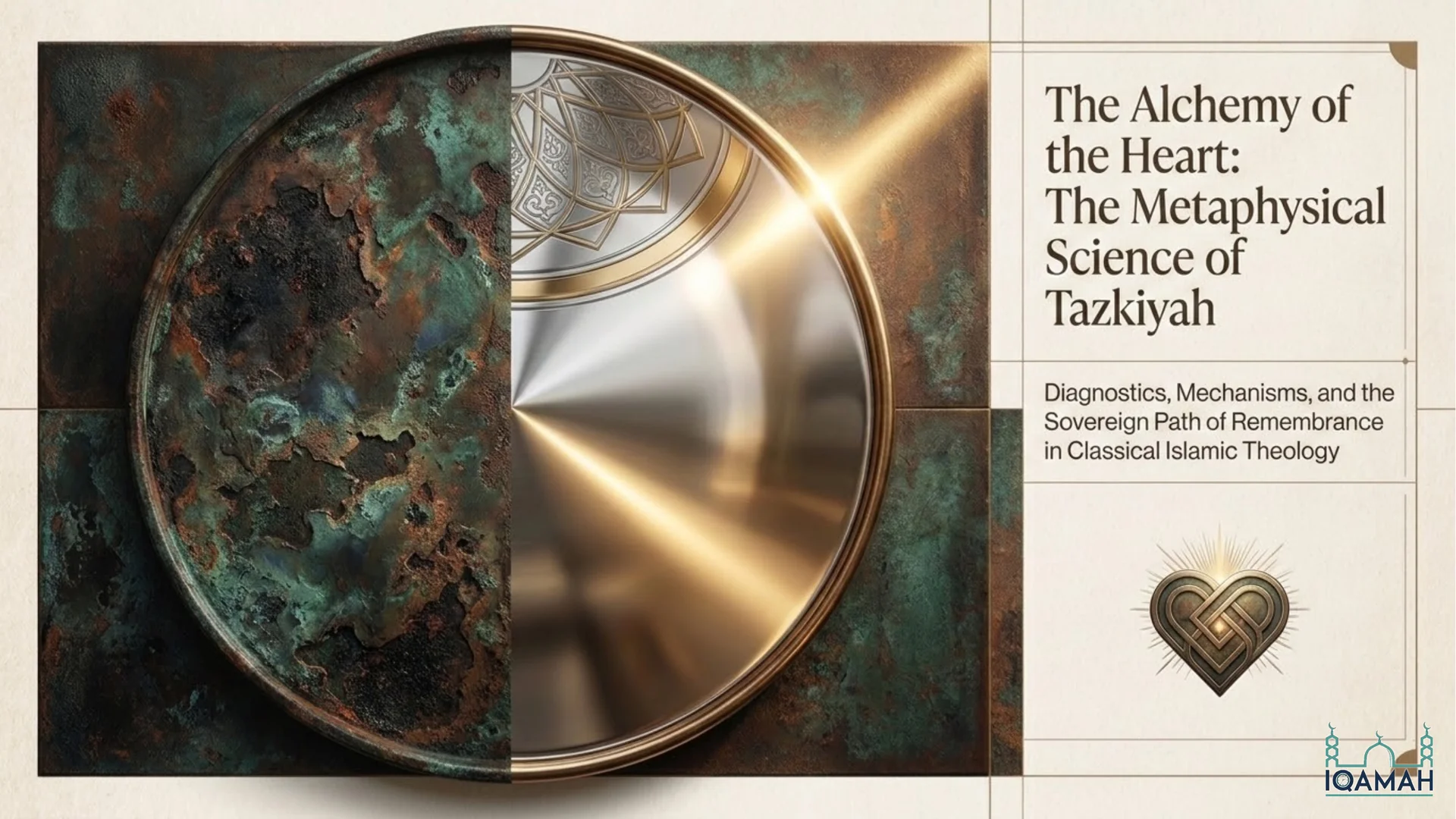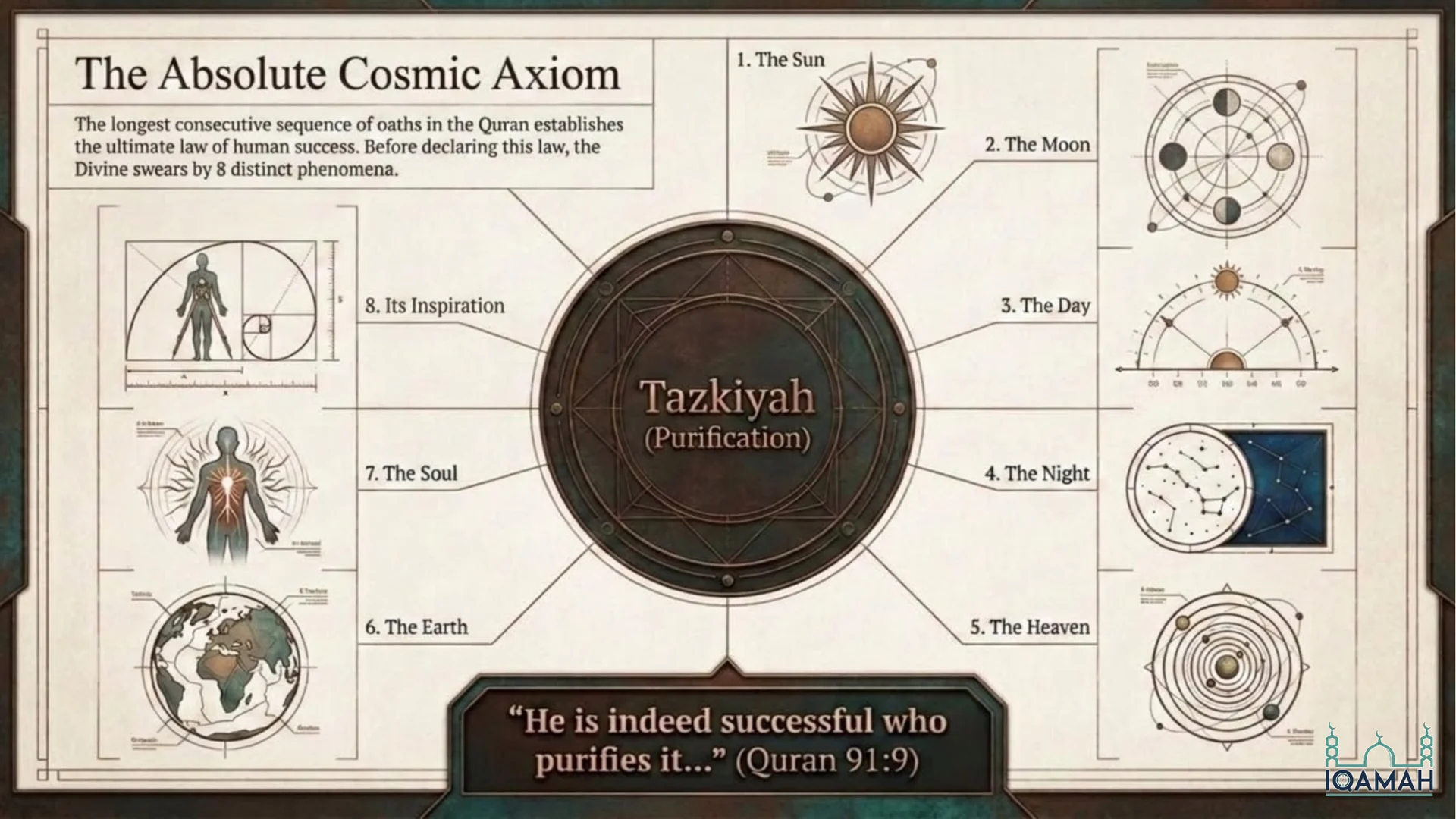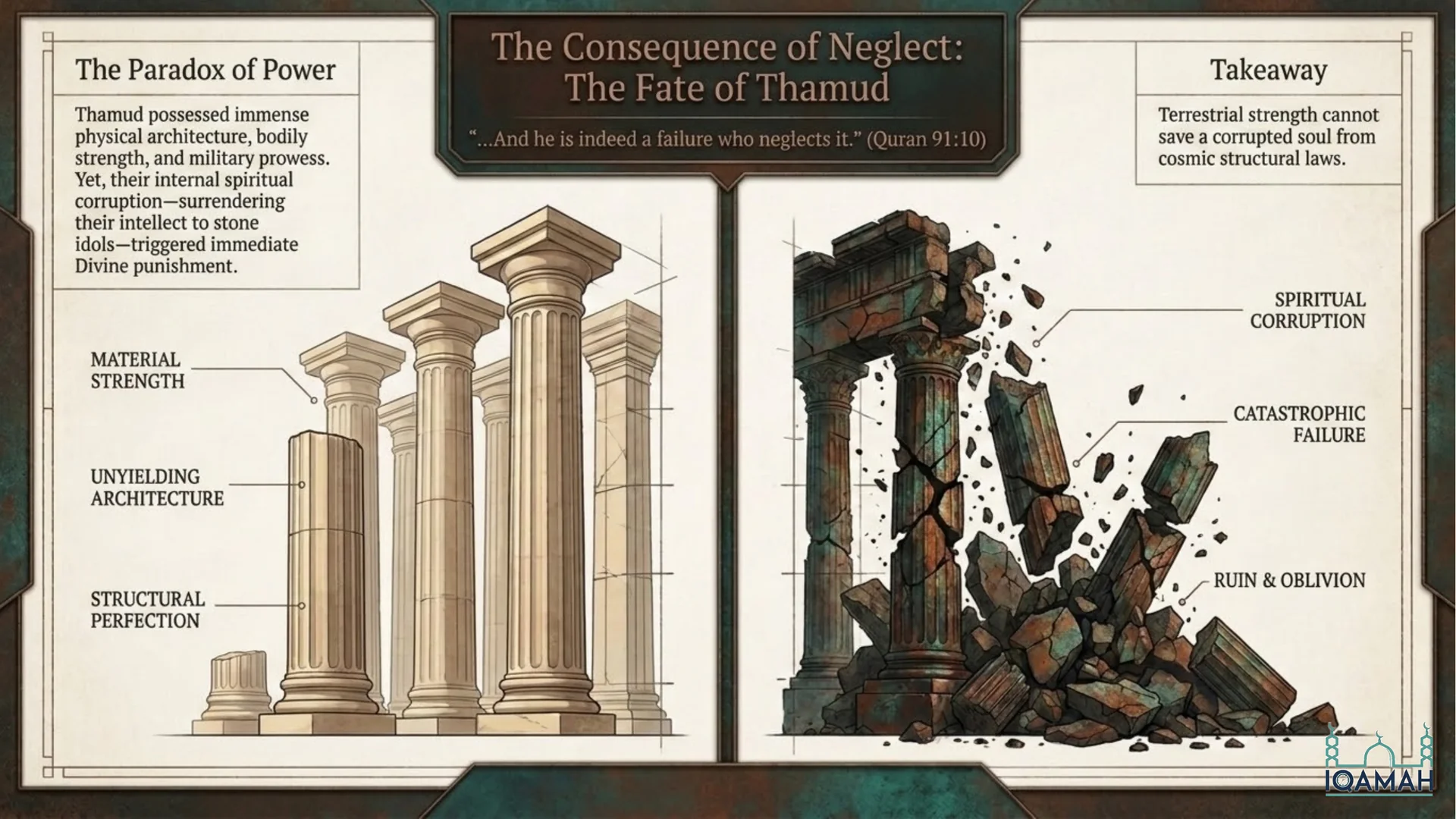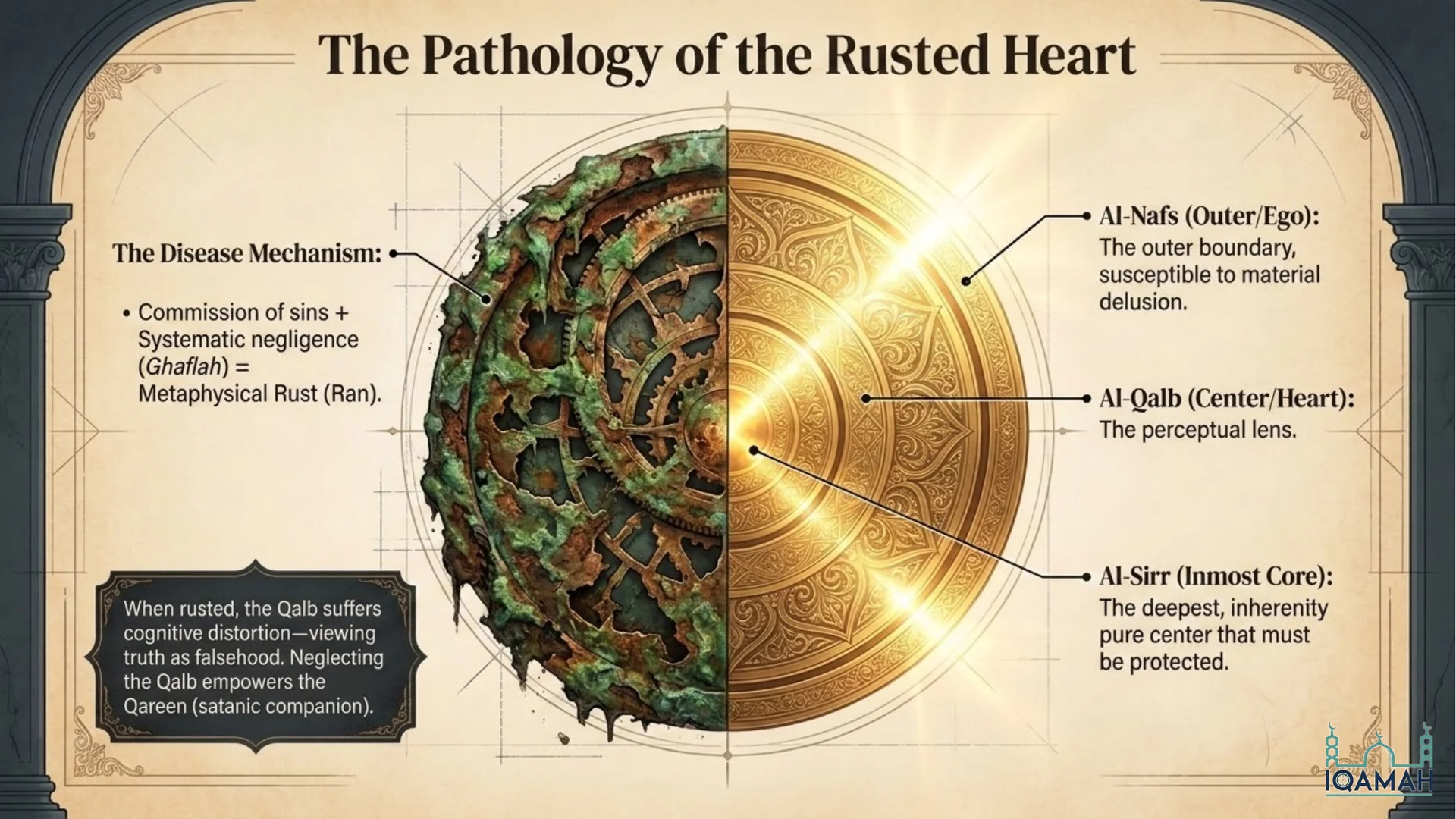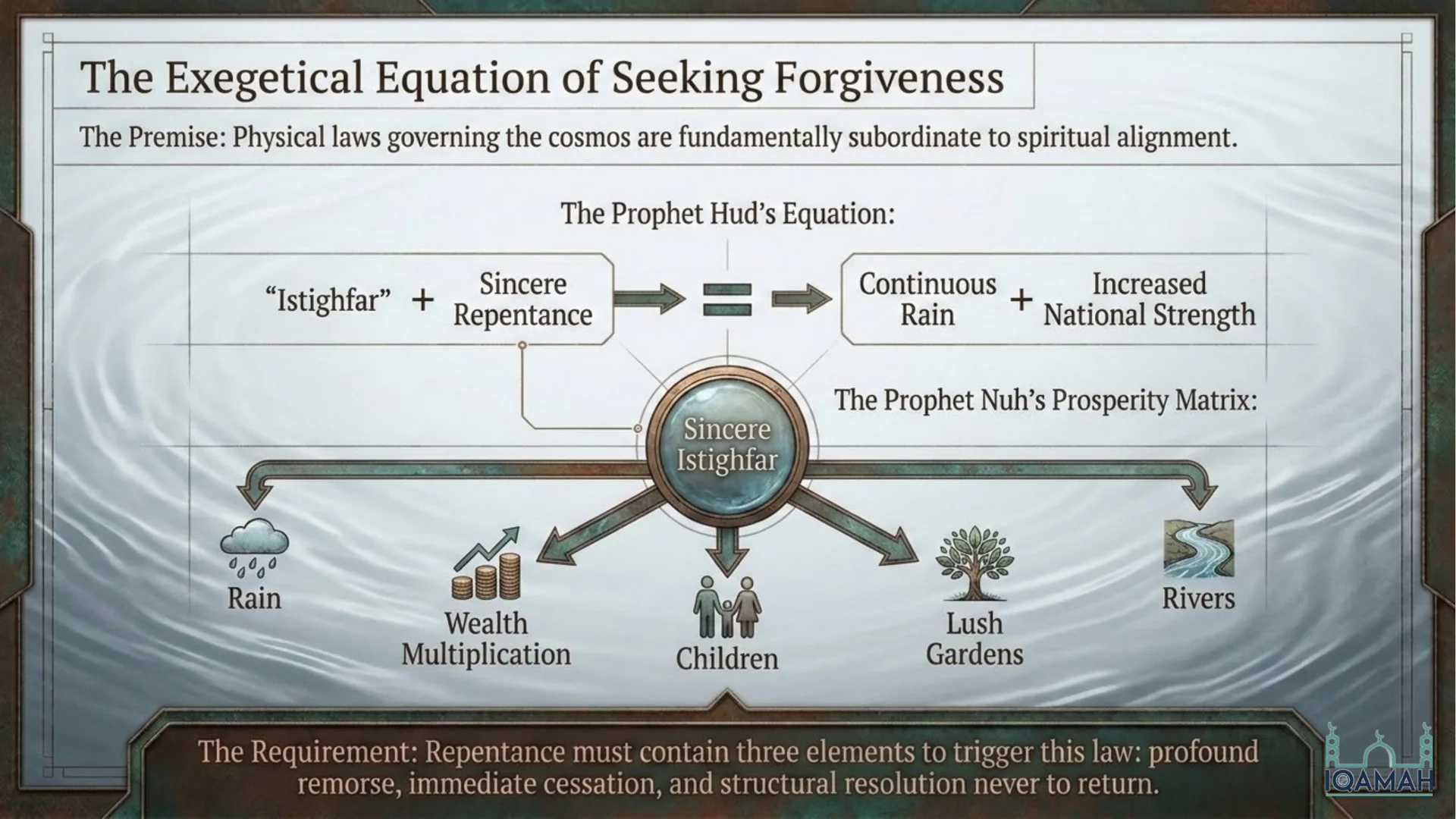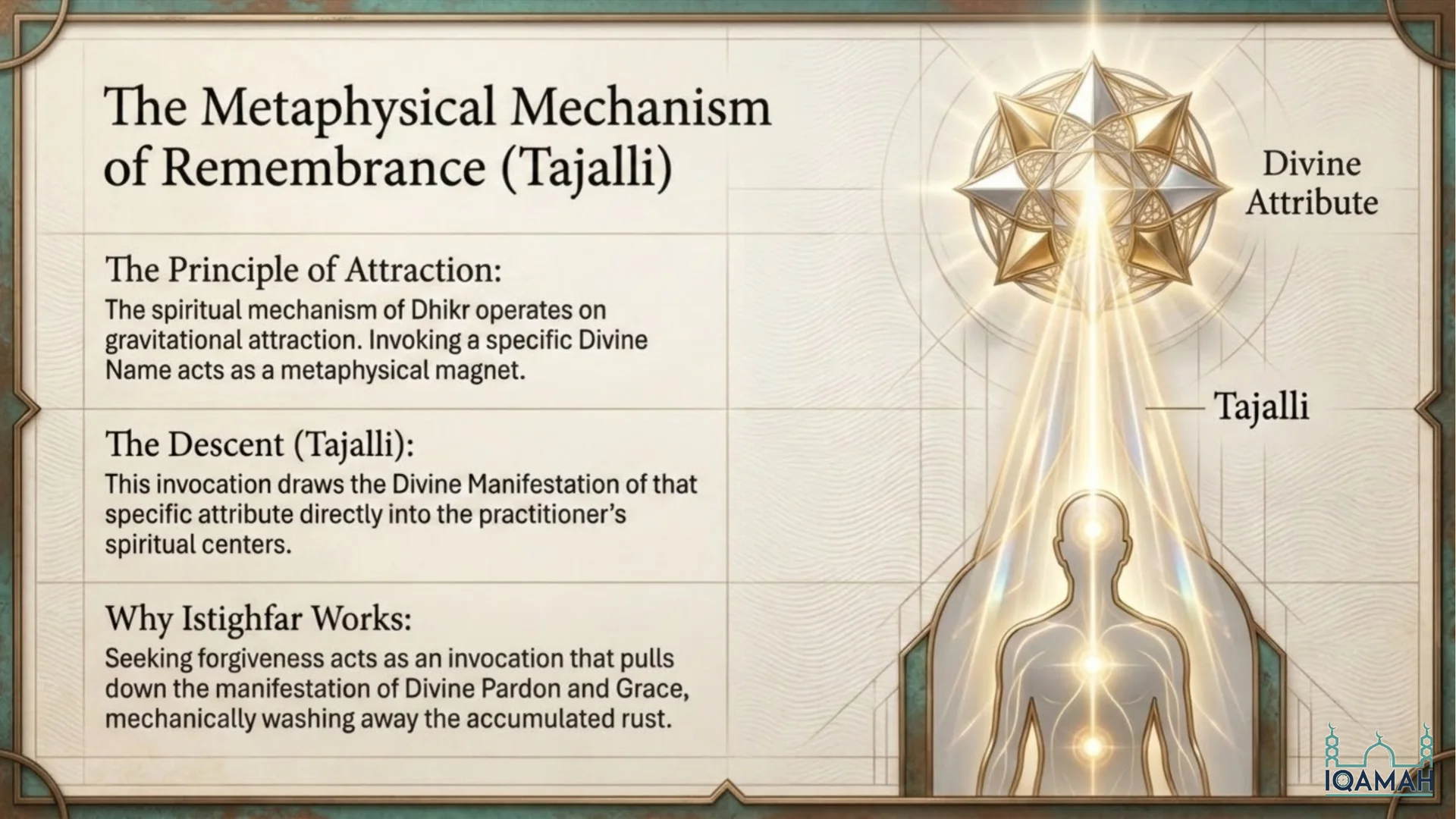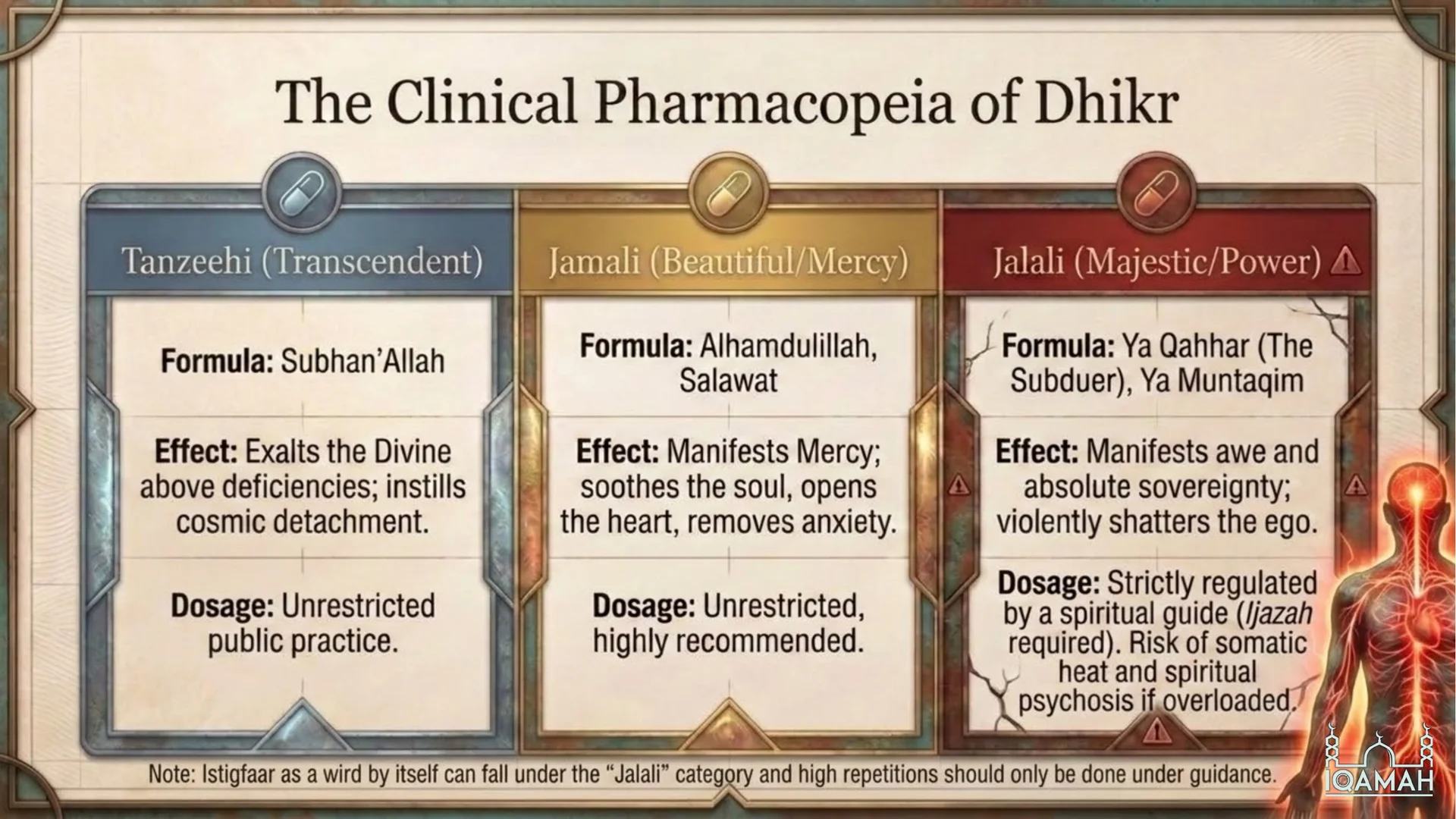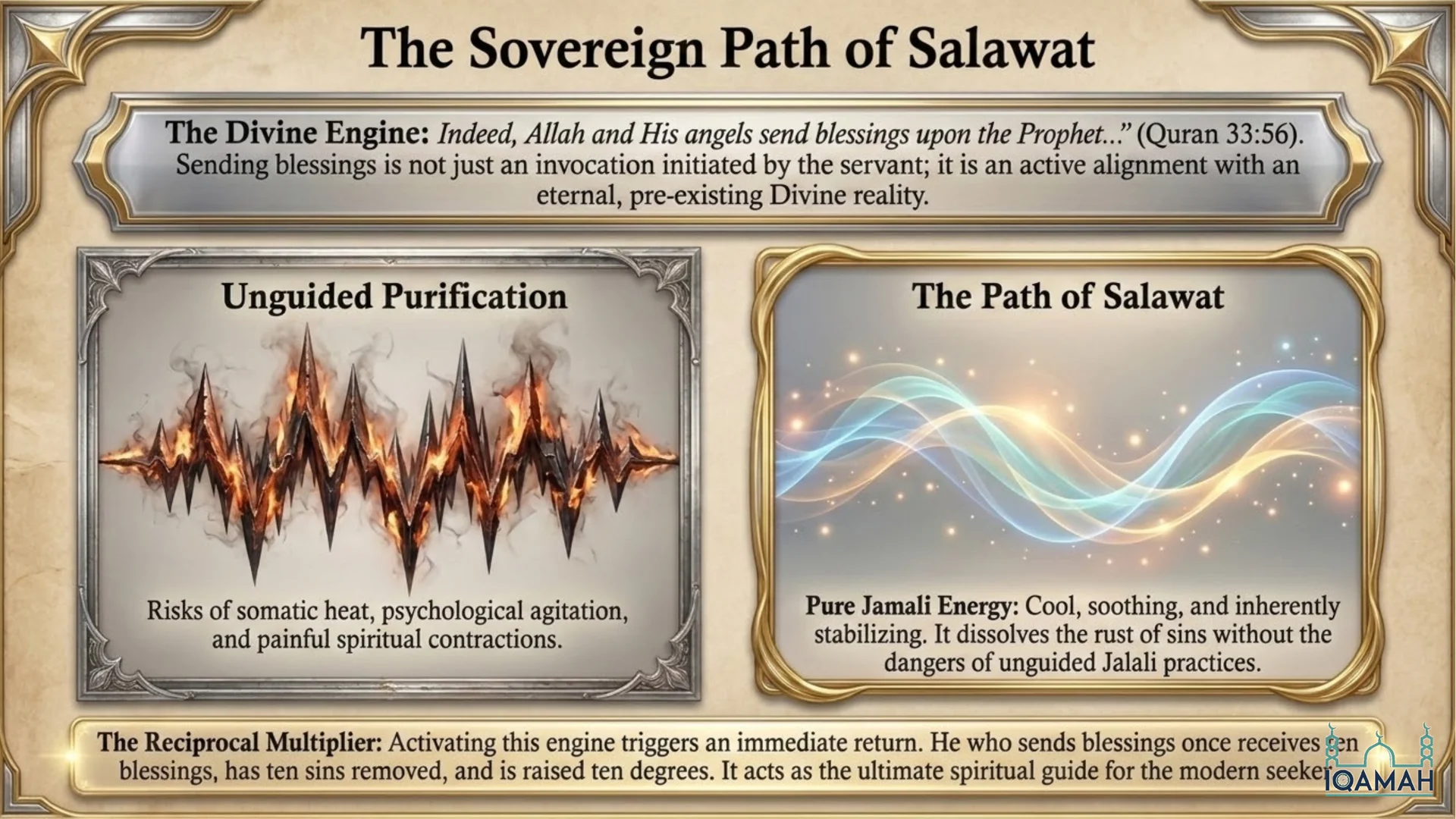
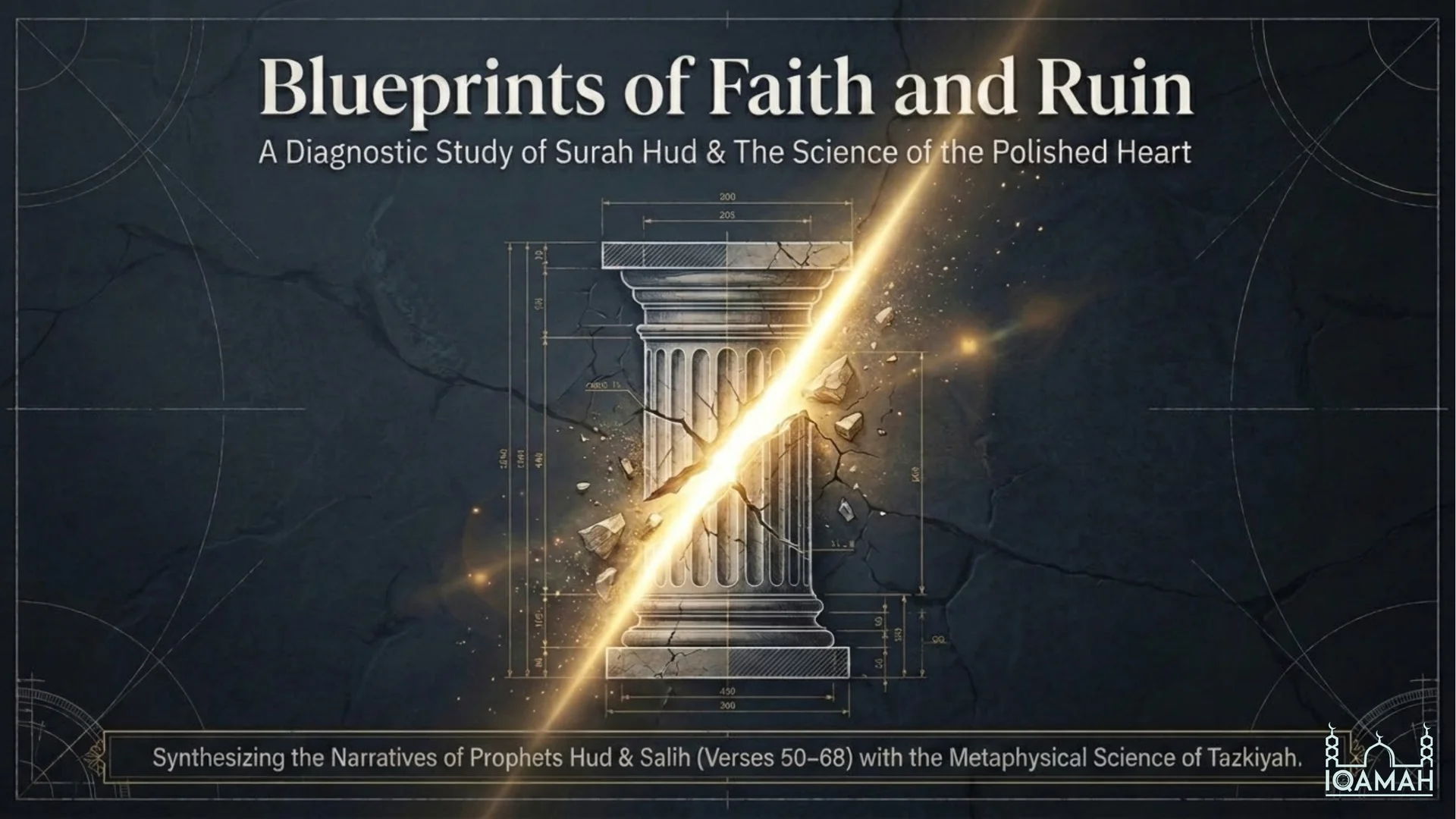
Welcome to Part 3 of our walk-through of Sūrah Hūd. Part 1 laid the doctrinal foundation (vv. 1–24); Part 2 took the first and longest prophet-story, Nūḥ (vv. 25–49). Today we take the next two destruction-narratives as a matched pair: Hūd sent to ʿĀd (vv. 50–60) and Ṣāliḥ sent to Thamūd (vv. 61–68). The title, 'Blueprints of Faith and Ruin,' captures the method: we will read these as two case-studies in how a civilization is built and how it is erased, and then turn to the inner counterpart — 'the science of the polished heart' (tazkiyah) — in the closing third of the deck.
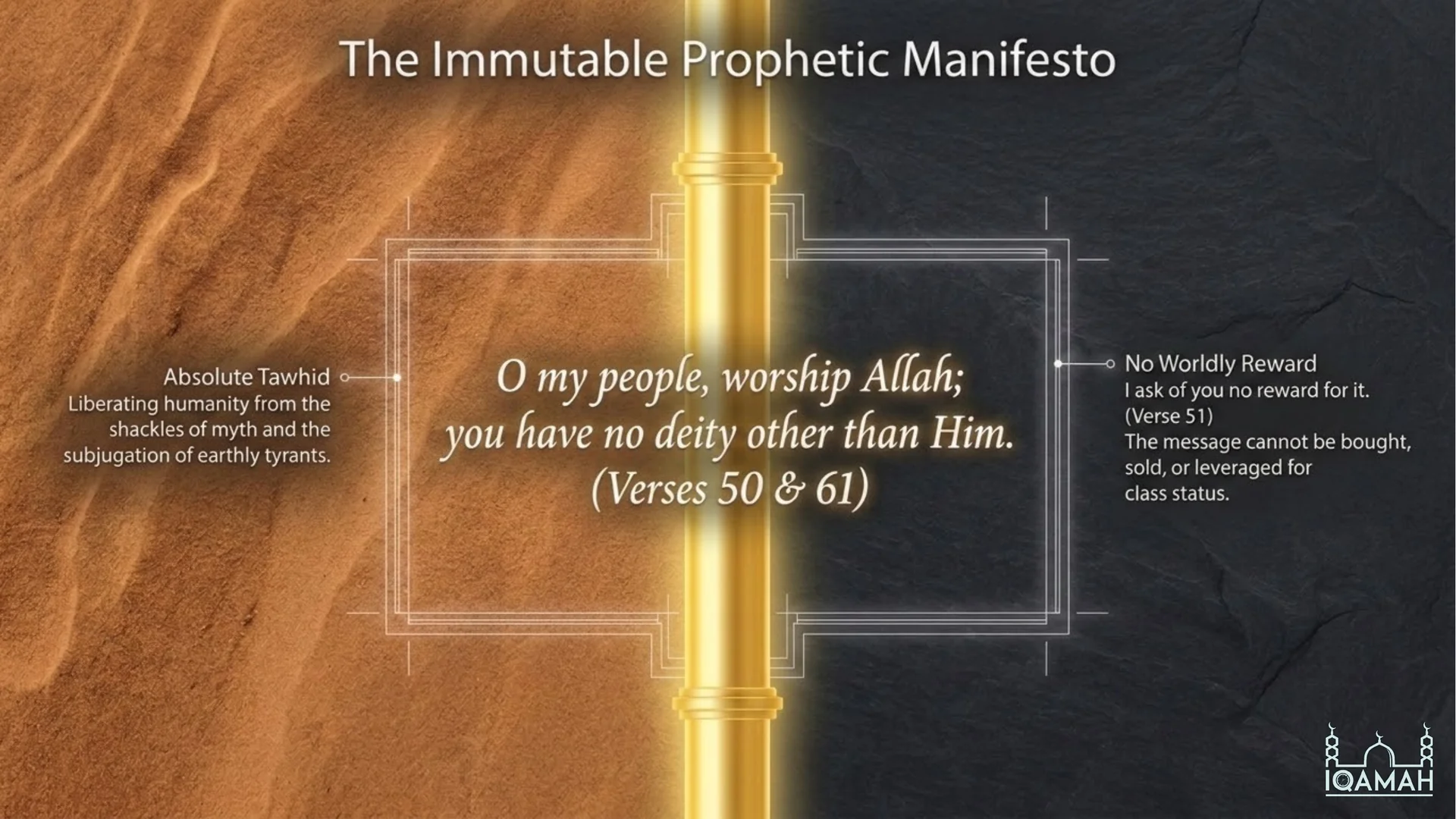
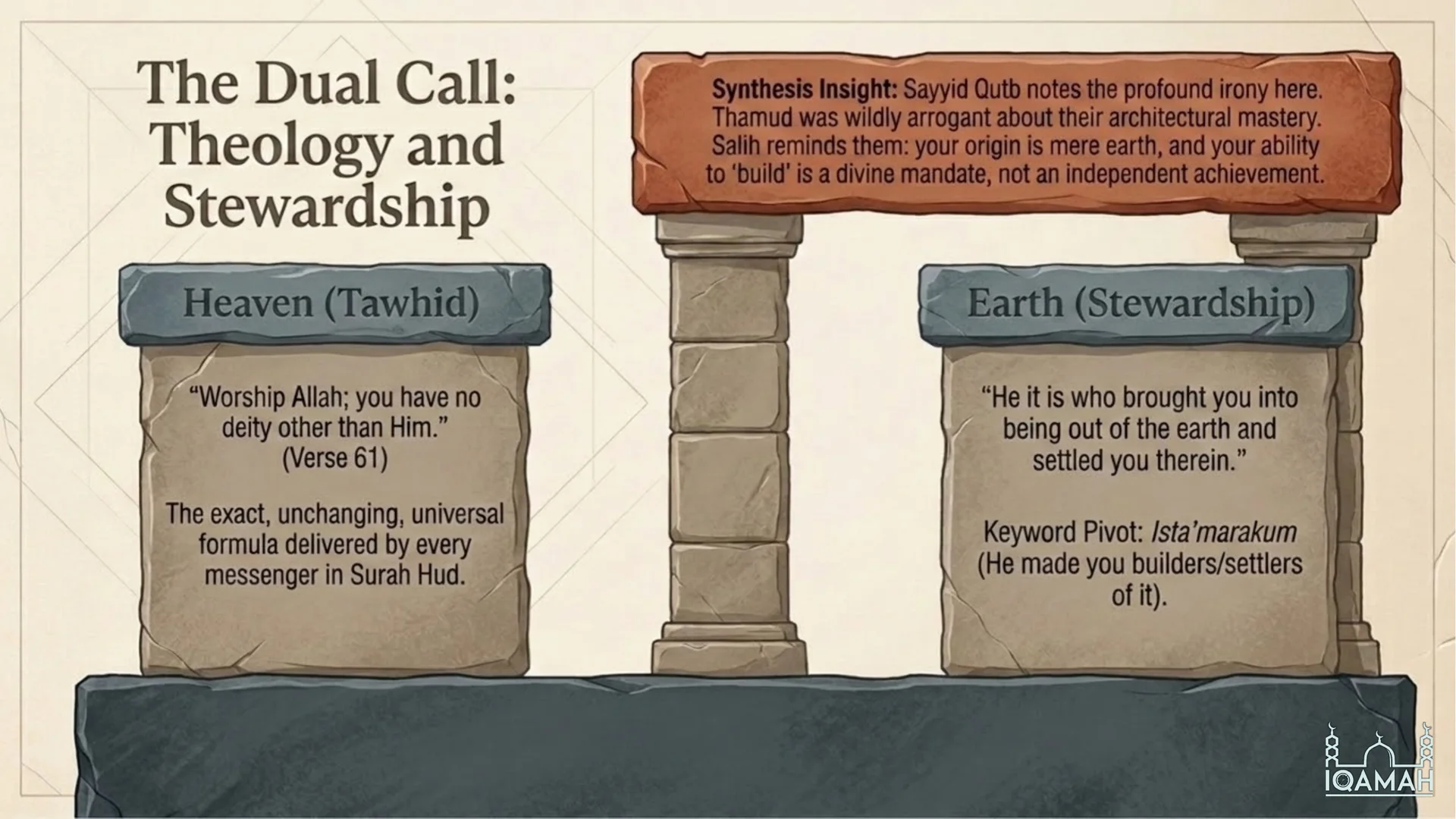
Hold the frame established in Part 1: Sayyid Qutb (In the Shade of the Qurʾān, vol. 9) shows that every prophet in this sūrah opens with one identical formula — 'worship Allah; you have no deity other than Him' — recurring almost verbatim for Nūḥ (v. 26), Hūd (v. 50), Ṣāliḥ (v. 61), and Shuʿayb (v. 84). So these stories are not separate tales; they are one argument restated across history. Maʿariful Qurʾān notes that although seven prophets appear, the sūrah is named for Hūd, which signals the special weight of his episode.
A note on method, as in the earlier parts: we draw on Saʿdī for direct verse-meaning, Maʿariful Qurʾān (Mufti Muḥammad Shafiʿ) for accessible synthesis and fiqh, Qutb for thematic and psychological depth, al-Wāḥidī for occasions of revelation, Ibn al-Jawzī (Zād al-Masīr) for the survey of classical opinions, and — strictly for balāghah — Zamakhsharī and Ibn ʿĀshūr. Tell the group: the goal is tadabbur and exposure, not mastery; ask for slow-downs as needed.